

When it comes to working at height, it’s important that you take into account all the proper safety measures to limit the possibility of a minor or serious accident from occurring, and that goes for both DIY home work as well as professional contract work. Whether you are repairing a few slipped tiles or installing an entire new steel roof, safety should always be the top priority. One of the most common questions we hear from homeowners and contractors trying to maintain the proper level of safety is whether or not it’s actually legal to work on a roof without scaffolding being setup.
The short answer is that UK law does not state that scaffolding is always mandatory for roof work, but it does require that any work at height is carried out safely. In practice, this means that scaffolding is often the safest and most compliant method – and in many situations, it is the only realistic option. In this article, we’ll explain what this might mean for your roofing work and what the logistics behind working safely on a roof regularly might look like.
What the Law Actually Says
Under the Work at Height Regulations 2005, UK employers and those in control of work (such as building owners or roofing contractors) must ensure that all work at height is properly planned, supervised and carried out in a safe manner.
Despite what many people think, the Health and Safety Executive (HSE) does not insist on scaffolding for every single roofing job, but it does require a safe working platform with suitable edge protection. For short-duration work, alternatives like mobile access towers, podium steps or safety harness systems may be acceptable, provided they offer equal safety.
However, for most roof repairs, installations and replacements, especially those involving large or heavy materials such as steel roofing sheets, fixed scaffolding is the preferred and safest choice.
When is Scaffolding Usually Required
While there is no blanket law making scaffolding compulsory in all cases, you will almost always require it in situations such as:
- Replacing large areas of roofing
- Installing steel roofing sheets or cladding on pitched roofs
- Working on roofs above one storey where ladders or mobile towers would be unsafe
- Jobs lasting more than a couple of hours or requiring frequent trips up and down
- Sites with public access below where falling materials could pose a hazard
In these scenarios, scaffolding not only meets HSE’s expectations for a secure working platform but also protects workers, passers-by and the property itself.
Are Roofing Contractors Allowed to Work Without Scaffolding?
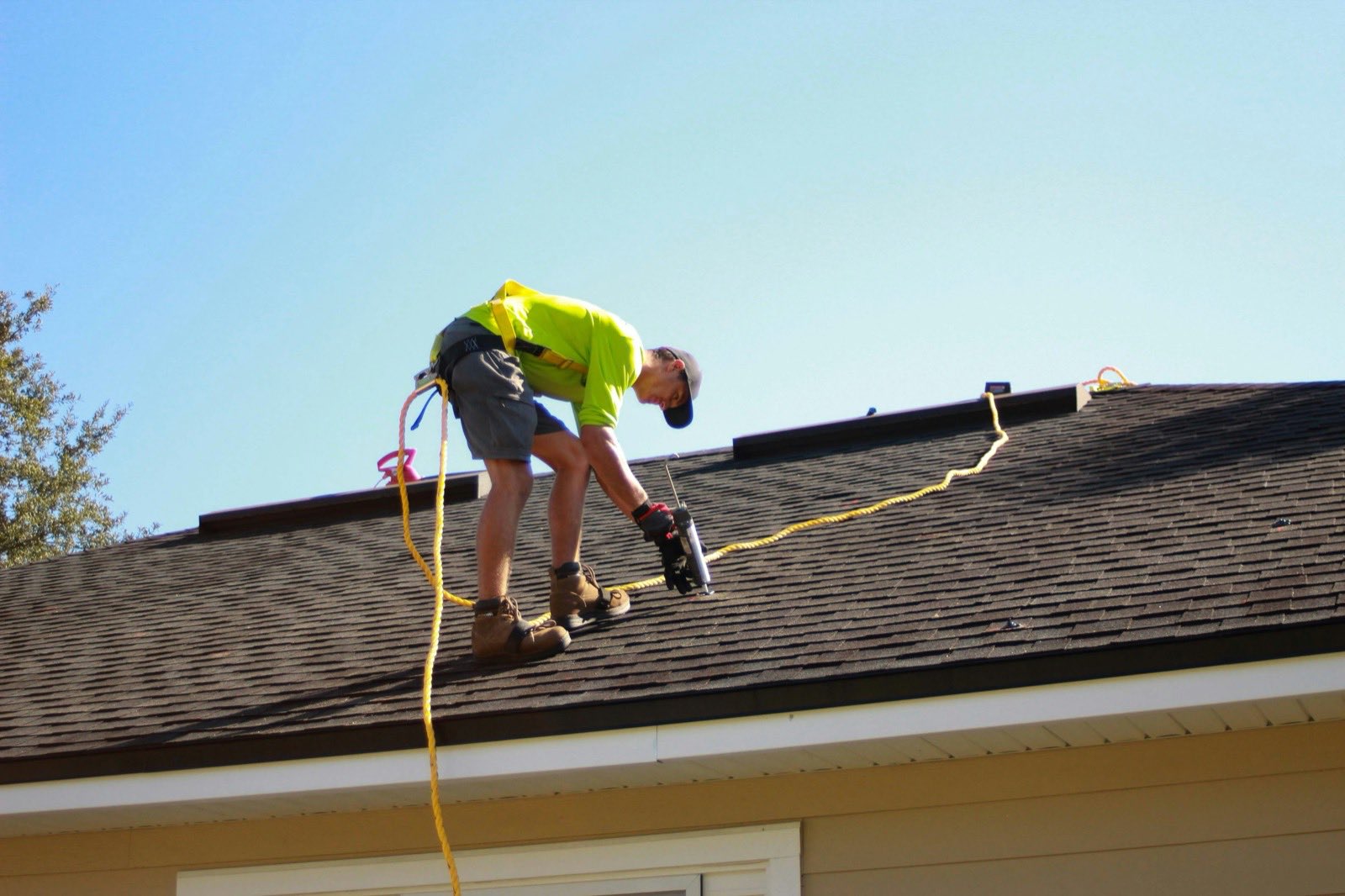
Yes, in very limited situations, but strict conditions apply. Contractors must be able to demonstrate that an alternative access method, such as a properly secured ladder, mobile tower or safety harness system, provides the same level of protection as scaffolding.
In practice, this means the work must be short in duration, low in risk and carried out in stable weather conditions. For example, replacing a single tile from a securely footed ladder or clearing a small blockage in a gutter might be acceptable.
However, anything involving extended time on the roof, heavy materials, complex installations or a significant risk of falling, such as fitting multiple steel sheets at a given time, would almost certainly require scaffolding to meet health and safety obligations. In these higher risk scenarios, scaffolding is not just safer, it is the most reliable way to comply with UK regulations and avoid potential penalties.
Do You Need Scaffolding for All Roofing Work?
Before deciding whether scaffolding is necessary, it helps to consider the type of work you are planning and the risks involved. Some small, low-risk tasks can be completed safely with alternative access methods, while others demand the stability, reach and protection that only scaffolding can provide. Below are some of the most common roofing and roofline jobs, along with guidance on when scaffolding is likely to be needed.
- Minor repairs: In some situations, a securely positioned ladder or mobile tower may be suitable if the task is short, straightforward and low in risk. This might include replacing a single slipped tile or clearing a small patch of moss. Even for these quick jobs, the ladder must be stable, the ground firm and the work area free from hazards.
- Tile replacement: Scaffolding is strongly recommended for replacing roof tiles, particularly on steep or high roofs where falls could have serious consequences. A stable platform allows workers to move freely, carry tools and materials safely and complete the job without overreaching.
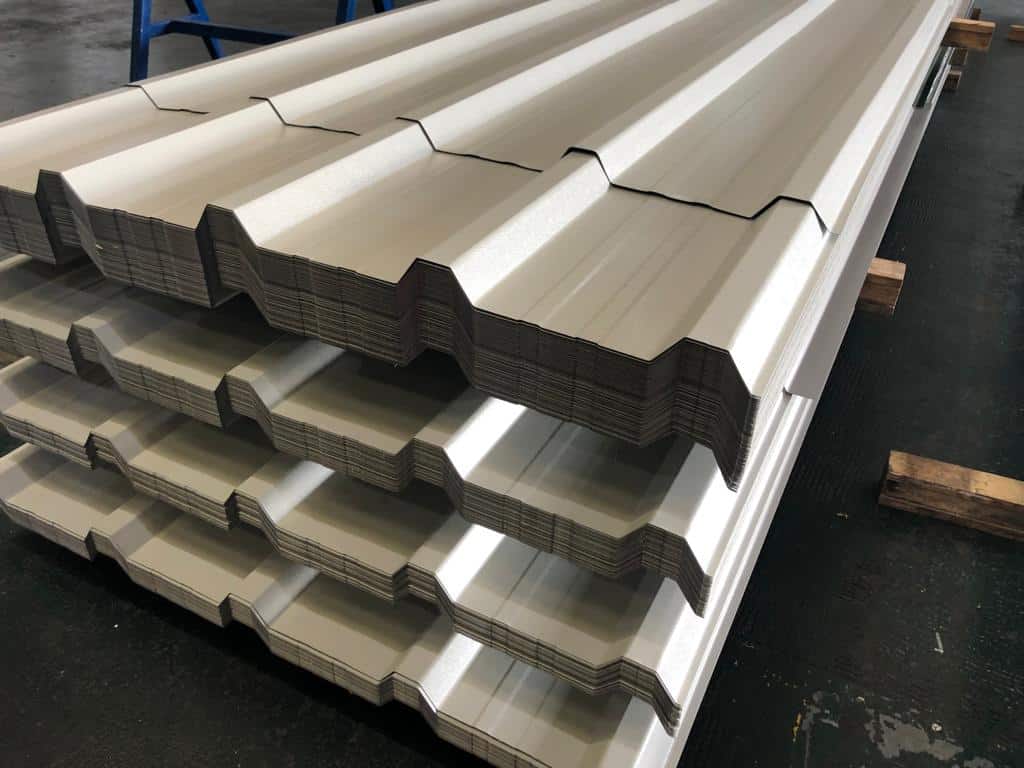
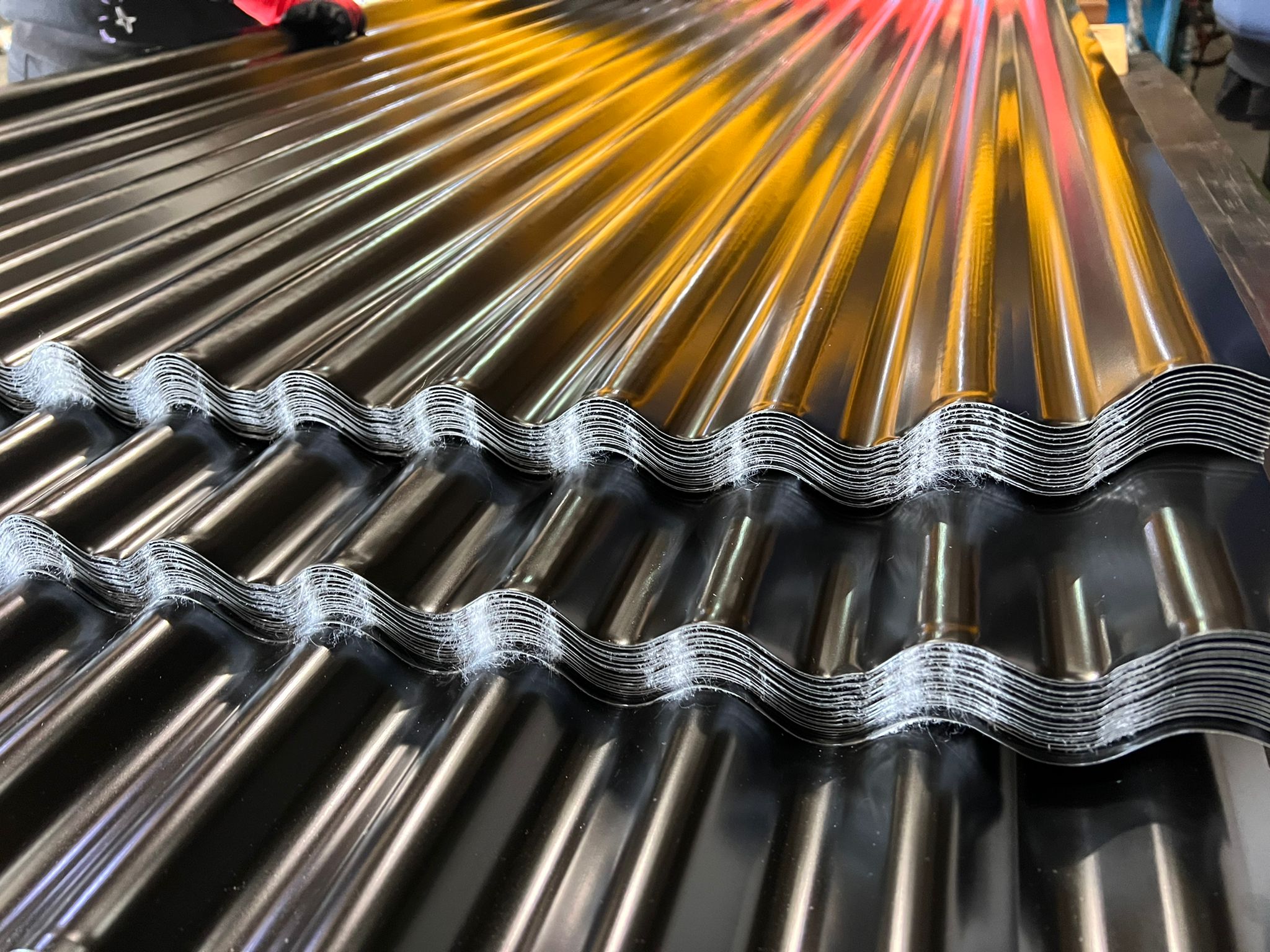
- Steel sheet installation: The size, weight and handling requirements of steel roofing sheets mean that scaffolding is generally the safest and most compliant option. A proper working platform makes it easier to manoeuvre sheets into place, secure them accurately and work efficiently while reducing the risk of accidents.
- Gutter and fascia replacement: Even though these are edge-level tasks, scaffolding is often needed on properties above one storey to allow safe access and handling of long lengths of guttering or boards.
- Chimney repairs or removal: Due to the height and awkward positioning of chimneys, scaffolding is almost always required to provide secure access and stability.
- Installing roof windows or skylights: Cutting into a roof for new openings is complex work that benefits from scaffolding for both safety and precision.
- Solar panel installation: Large and heavy solar panels, combined with the need for secure fixing, make scaffolding the preferred method for safe and efficient installation.
- Roof cleaning and treatment: Cleaning, moss removal or applying protective coatings might seem simple, but without scaffolding these jobs can be hazardous, particularly on wet or sloped surfaces.
How Much is Scaffolding for Roof Repair?
The cost of scaffolding for roof work can vary considerably, depending on a range of factors. Property size, roof height and pitch, location, ease of access and the length of time the scaffolding is required all have an impact. A straightforward repair on a single-storey home will generally be far less expensive than a full re-roof on a tall property, particularly if complex arrangements are needed to work around extensions, chimneys or awkward roof shapes.
Prices can also rise in areas with higher labour costs or where additional safety features such as debris netting or protective sheeting are required. While scaffolding can feel like a significant investment, especially for short-term jobs, it is almost always more cost-effective than dealing with the financial and legal consequences of accidents, delays or non-compliance with safety regulations.
Final Thoughts
So, is it illegal to work on a roof without scaffolding? Not in every case, but if you cannot guarantee an equally safe alternative, you are at risk of breaking UK health and safety law. In reality, scaffolding remains the most reliable way to protect workers and ensure compliance. Whether you are repairing a garden shed or installing a full steel roof, investing in proper access equipment is an investment in safety, professionalism and peace of mind.
FAQs
1. What happens if I do not follow scaffolding safety regulations?
Ignoring safety rules can result in enforcement notices, fines and, in serious cases, prosecution. If someone is injured, you could also face civil claims and higher insurance premiums.
2. Can scaffolding be erected in poor weather?
Scaffolding should only be put up in safe conditions. High winds, heavy rain or icy surfaces can make assembly dangerous, and contractors may postpone work until the weather improves.
3. How long does it take to put scaffolding up and take it down?
For most domestic jobs, scaffolding can be erected within a few hours, while more complex structures may take a full day. Dismantling is generally quicker but still depends on site access and weather conditions.
4. Do I need permission to place scaffolding on a pavement or road?
Yes. If scaffolding will be positioned on public land, including pavements or roads, you must have a permit from the local council. Most scaffolding companies will arrange this on your behalf.
5. Are there alternatives to traditional scaffolding?
Depending on the job and building layout, options like mobile access towers, cherry pickers or rope access systems might be suitable. However, these alternatives must still meet all safety requirements.