

- Helps Reduce Heat Loss & Condensation
- Choice of Coatings & Colours
- Custom Made to Order
- Nationwide Delivery within 7 Days
Get Your Custom Quote
Exterior Insulated Wall Cladding Panels
We supply high-performance exterior insulated wall cladding panels and systems, made to your exact specifications. Combining strength, weather resistance and durability with excellent thermal efficiency, insulated wall cladding helps keep buildings warmer in winter and cooler in summer. Choose from three systems, each suited to different project requirements.
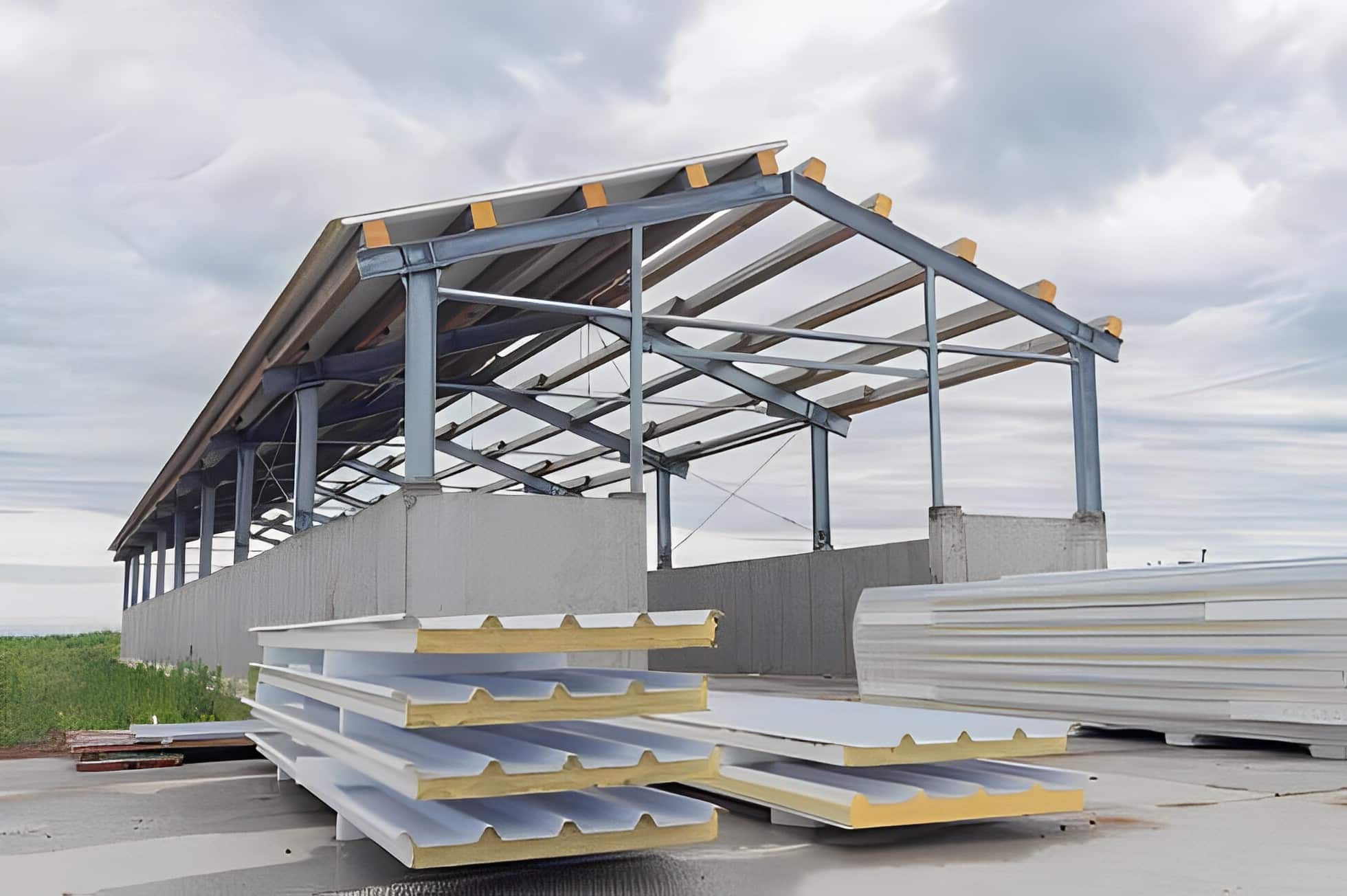
Choose Your Insulated Wall Cladding System
Each system offers a different balance of thermal performance, flexibility and cost, so the right choice depends on your building and your project.
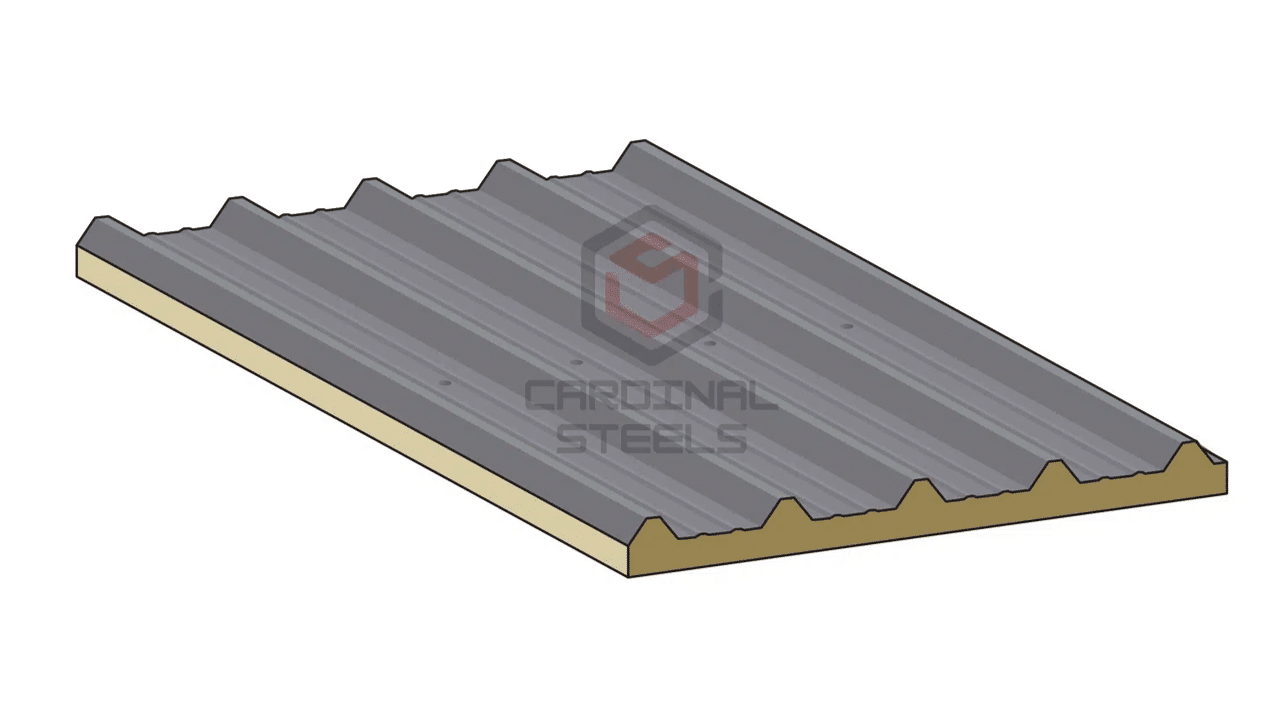
Composite Panels
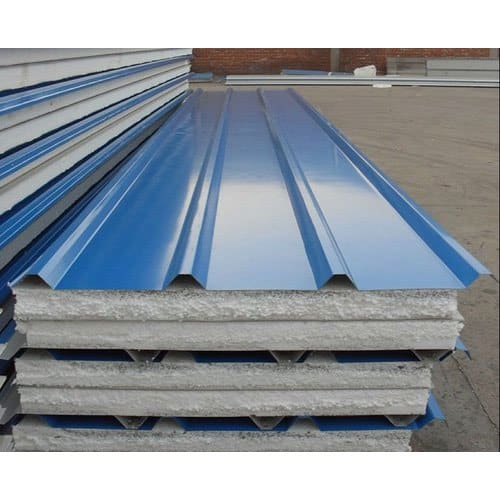
Factory-bonded layers combine insulation and steel in a single panel. Lightweight and low-maintenance, composite wall cladding can be tailored in length and U-value to suit your building’s specification and the regulatory requirements it needs to meet.
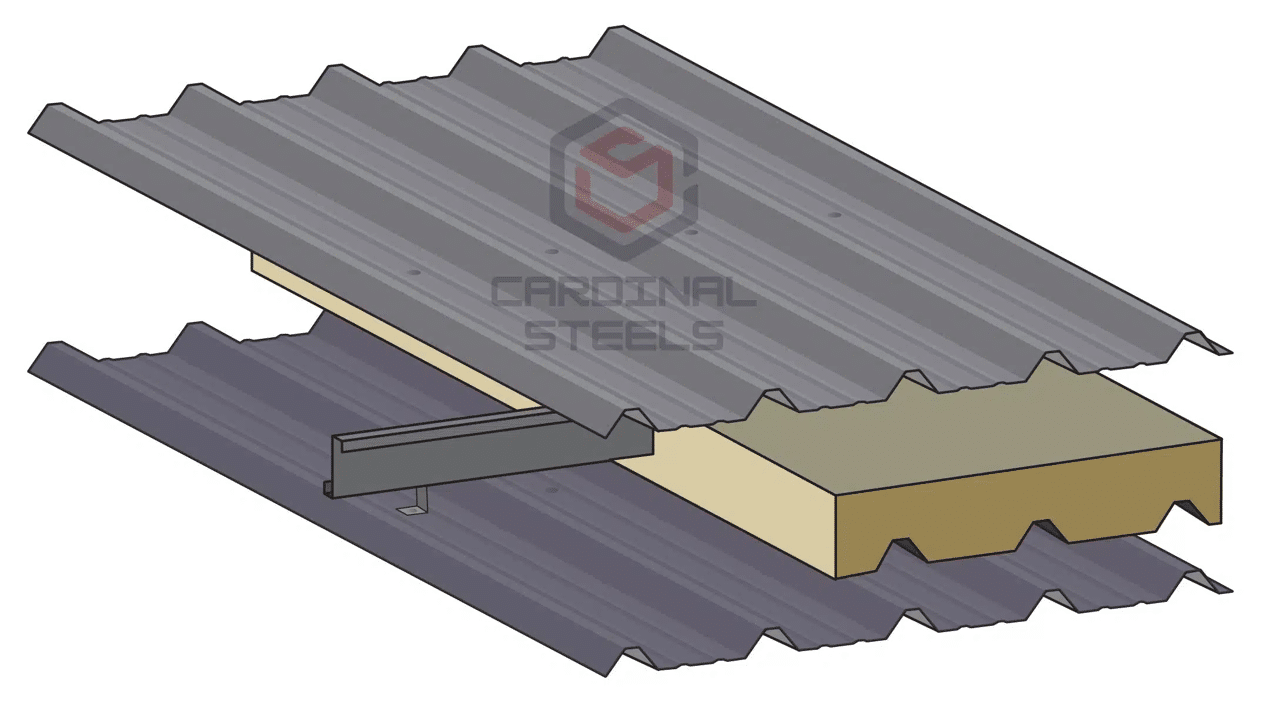
Twin Skin
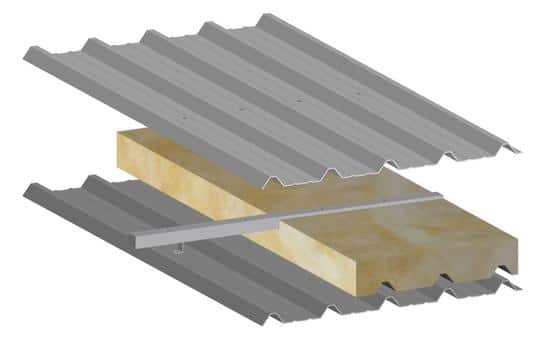
Also known as a double-skin system, twin skin cladding combines a liner sheet, an insulation layer and an outer profiled sheet supported by spacers. It delivers strong thermal performance while remaining flexible and economical for a wide range of projects.
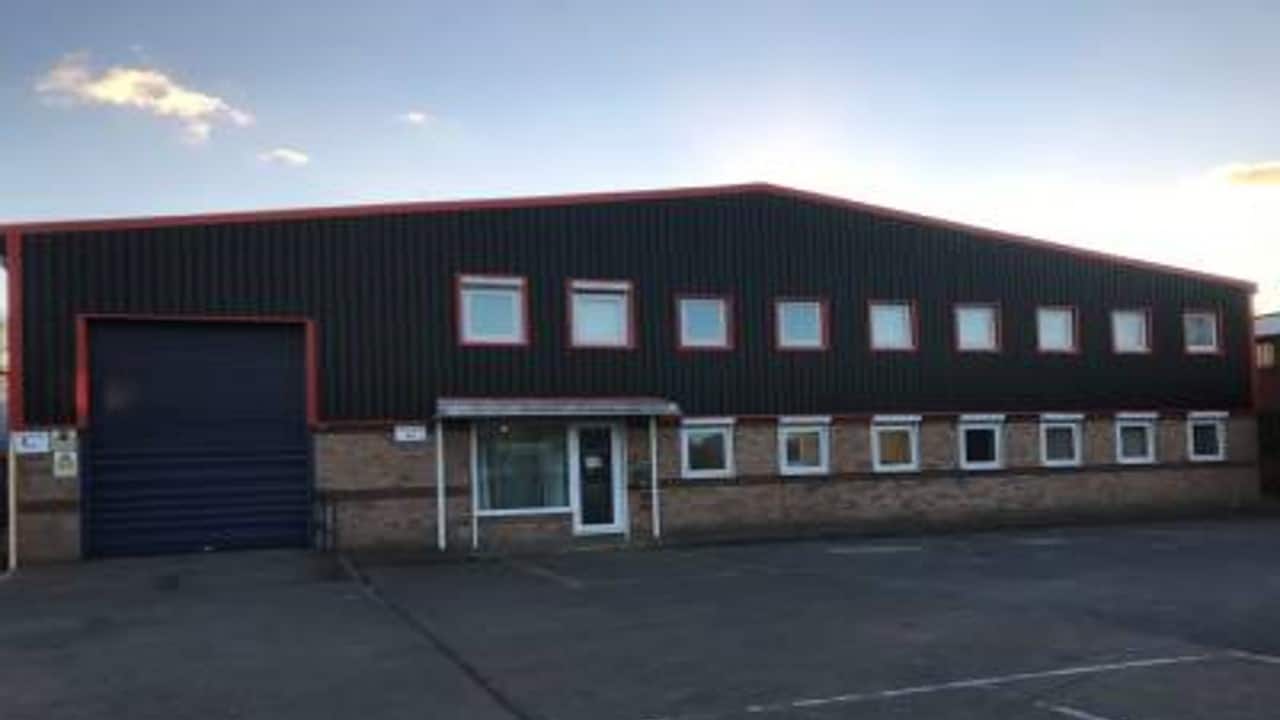
Over Cladding
Ideal for upgrading existing façades, over cladding installs new insulated panels over the current surface using battens. It improves thermal performance, reduces waste and gives older buildings a refreshed appearance without the need for a full replacement.
Coating Options for Insulated Wall Cladding
On insulated wall cladding, the coating protects the outer steel skin, the part exposed to the weather, so it plays a big part in how your cladding looks and performs over time. Choose the finish that suits your building’s style, budget and performance needs.
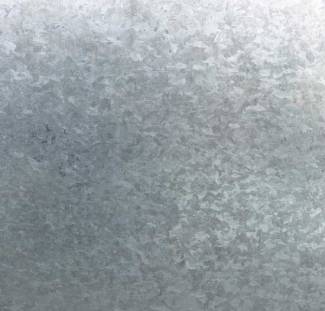
Galvanized
- Shiny/Dull silver colour in finish.
- Available in 0.4mm up to 0.7mm thickness.
- No Guarantee available.
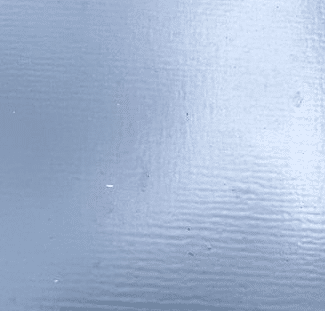
Polyester
- Gloss finish.
- Available in 0.4mm up to 0.7mm thickness.
- Up to 15 years guarantee.
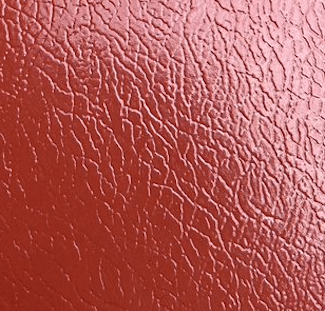
Plastisol
- Gloss finish.
- Available in 0.4mm up to 0.7mm thickness.
- Up to 25 years guarantee.
Not Sure What You Need?
If you’re not sure which insulated system, U-value, coating or colour is right for your building, just get in touch. Our team can talk through your project and help you put together the right specification, including the flashings and fixings you’ll need.
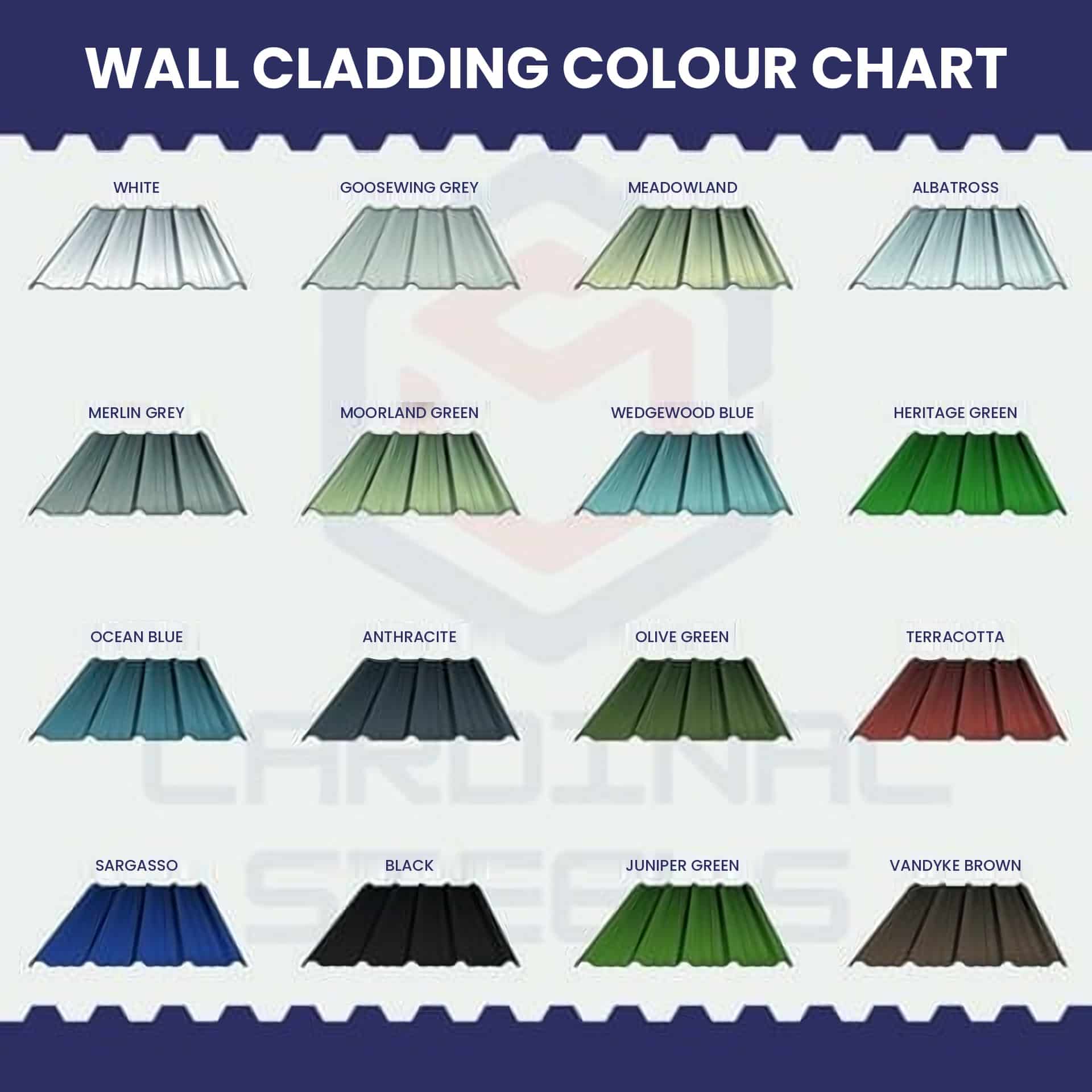
Choose a Colour for Your Insulated Wall Cladding
Your wall cladding is often the most visible part of your building, so the colour you choose shapes how it looks from the road, yard or the car park. Go for a clean, modern finish in white or grey, make a statement with heritage green or terracotta, or pair your cladding with flashings in a matching or contrasting colour. If you’re over cladding an older building, it’s also a chance to give it a completely new look. Colour availability varies with your chosen coating and system, and galvanised steel is supplied in its natural metallic finish.
Request a Free Colour Sample
Not sure which colour to choose, or matching an existing building? Request a free physical sample to see the true colour and finish before you order.
Why Insulated Wall Cladding Matters
Without insulation, steel walls in a heated or occupied building can lose heat and attract condensation on the inside, which can drip onto stock and machinery and is often mistaken for a leak. At Cardinal Steels, our insulated wall cladding is designed to reduce heat loss and keep internal surfaces warmer, helping to keep your building dry and comfortable all year round.
To find out more, take a look at our guides to condensation under steel roof sheets and stopping cold bridging.
Insulating Your Walls and Roof Together
Insulating your walls is only half the job. Heat escapes through whichever part of a building is least insulated, so a single-skin roof becomes both the main route for heat loss and the coldest surface, which is where condensation will form instead. That’s why we supply insulated sheets for roofs as well as walls. Our insulated roofing range covers the roof, while overcladding lets you upgrade an existing roof that is sound enough to stay in place. Ordering both together also means one quote and matching colours across the building.
If your building is unheated, full roof insulation may not be necessary. In that case, our anti-condensation roof sheets can help control drips, although they won’t reduce heat loss.
Our article on insulated or twin skin cladding compares the options in more detail, or our team can advise on the right approach for your building.
Tell us your wall sizes and how the building will be used, and our team will put together a quote for the right insulated system, including everything you need to finish the job.
Frequently Asked Questions
-
Is an insulated panel quicker to fit than a built-up system?
Generally yes. The panel arrives as one component and is fixed once, rather than assembling a liner, spacers, insulation and outer sheet separately on site.
-
Is insulated wall cladding made to order?
Yes. Tell us your wall sizes and how the building is used and we’ll quote the right insulated system for your project.
-
Which insulated cladding system is right for my building?
It depends on your building and your project. Composite panels are a quick, single-fix option for new buildings, twin skin offers more flexibility where the structure is less straightforward, and over cladding lets you upgrade an existing building without stripping it back. Our team can help you choose the right system for your project.
-
What's the difference between insulated and anti-condensation cladding?
Insulated cladding reduces heat loss, which keeps internal surfaces warmer and reduces how much condensation forms. Anti-condensation sheets don’t insulate, but hold condensation in a fleece backing until it can evaporate, which makes them a cost-effective option for unheated buildings.