
Agricultural buildings ask more of a roof than most people expect. Long spans, exposed sites, corrosive atmospheres inside, and a working life measured in decades rather than years. The profile you choose has to cope with all of it, and the right answer is not always the cheapest sheet on the list.
Start with the span, not the sheet
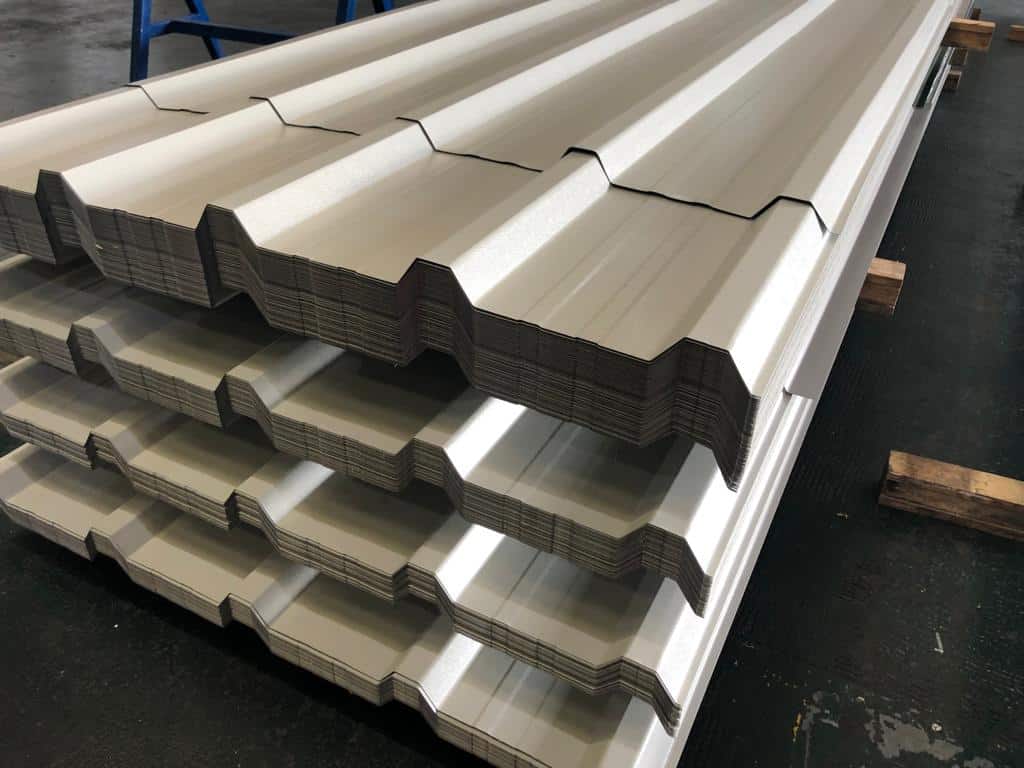
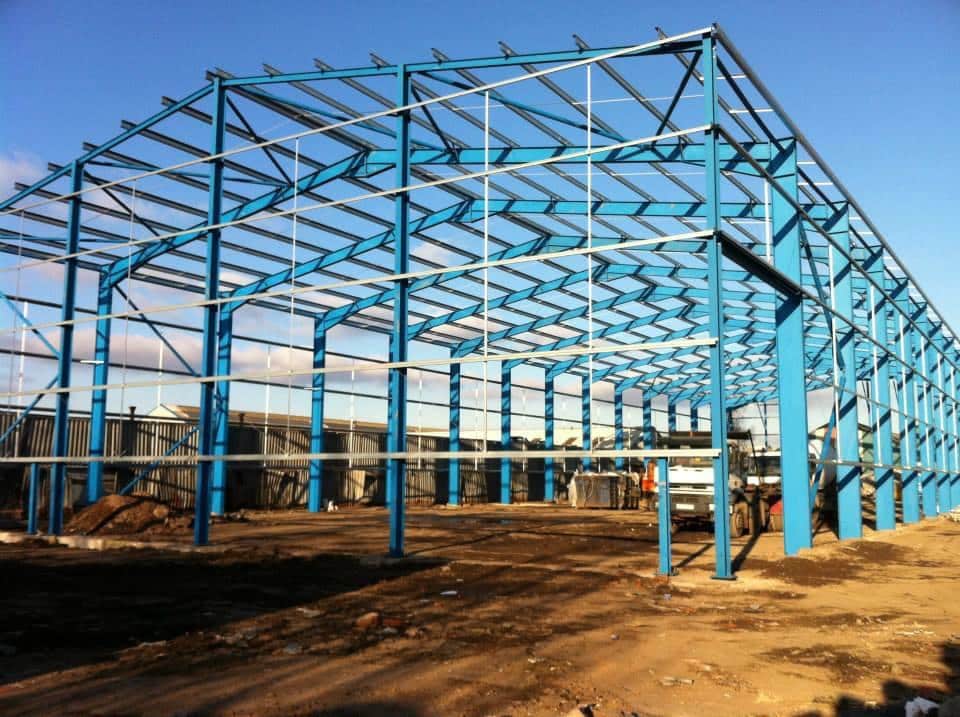
The single biggest constraint is how far the sheet has to reach between supports. A deeper profile spans further before it starts to deflect, which is why box profile is the default on most modern agricultural frames while corrugated tends to appear on shorter spans and refurbishments.
Before you compare profiles, measure the actual purlin centres on the building rather than working from the original drawing. On older buildings they are frequently not what the drawing says, and a sheet specified for the wrong centres is a problem you discover after it is fixed.
Profile options in practice
Box profile
The trapezoidal ribs of a box profile sheet give good stiffness for the weight, which is why it dominates agricultural roofing. Our CS32/1000 and CS34/1000 profiles cover most requirements, and sheets are cut to length rather than supplied in fixed sizes, so you can run a slope in one piece where the structure allows.
Corrugated
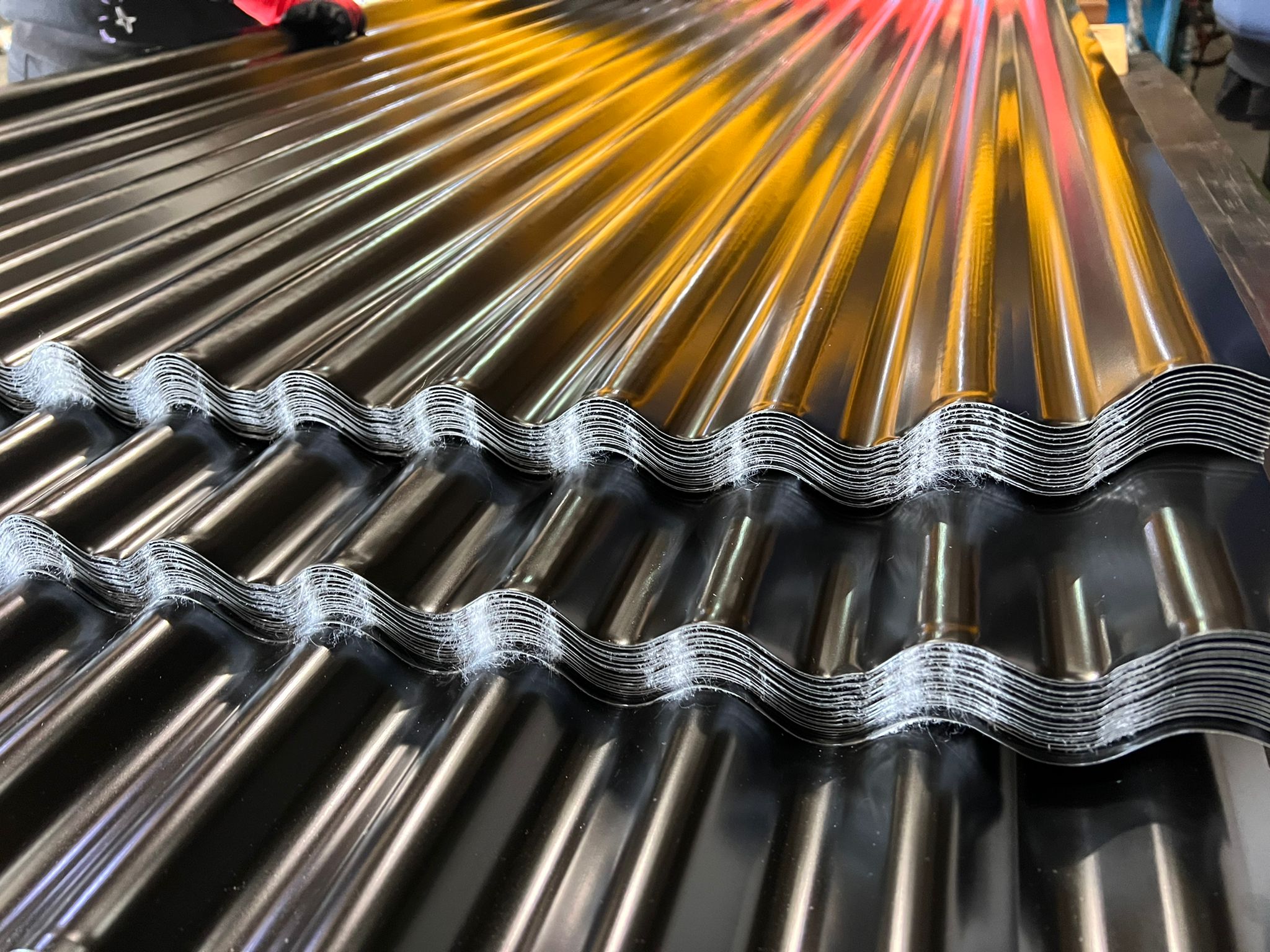
The rounded profile of corrugated sheeting reads as more traditional, which matters in some planning contexts and on older estates where a new building sits alongside existing ones. It is a sensible choice on shorter spans and for matching what is already there.
Bespoke and obsolete profiles
Where you are patching or extending a building put up decades ago, matching the original profile is often the difference between a repair that looks intentional and one that looks like a repair. Profiles that are long out of general production can still be rolled to order.
Gauge: where not to economise
Sheet thickness is the specification most often trimmed to save money, and it is usually the wrong place to do it. As a general rule 0.7mm suits roofing and 0.5mm suits cladding, because a roof carries loads a wall does not: wind uplift, snow, and the weight of whoever walks on it during maintenance.
On an exposed agricultural site, going lighter on the roof to save on the material bill tends to be repaid in deflection, fixing fatigue and premature replacement.
What the building is used for changes the answer
Livestock
Housing animals means warm, humid air rising to meet a cold roof. That is the exact condition that produces condensation dripping back onto stock and bedding. An anti-condensation backing absorbs the moisture and releases it as conditions change, which is usually a better answer than trying to ventilate the problem away in a building that also needs to stay draught-free.
Grain and produce storage
Dry storage has different priorities. Here the concern is usually keeping moisture out entirely and avoiding drips onto stored crop, and roof lights matter more than you might think for working safely inside without permanent lighting. GRP roof lights are typically specified in the same profile as the sheets so they sit flush.
Machinery and general purpose
The most forgiving case, and where a straightforward single-skin box profile roof usually does the job well. Worth still thinking about condensation if machinery comes in wet.
Exposure and fixings
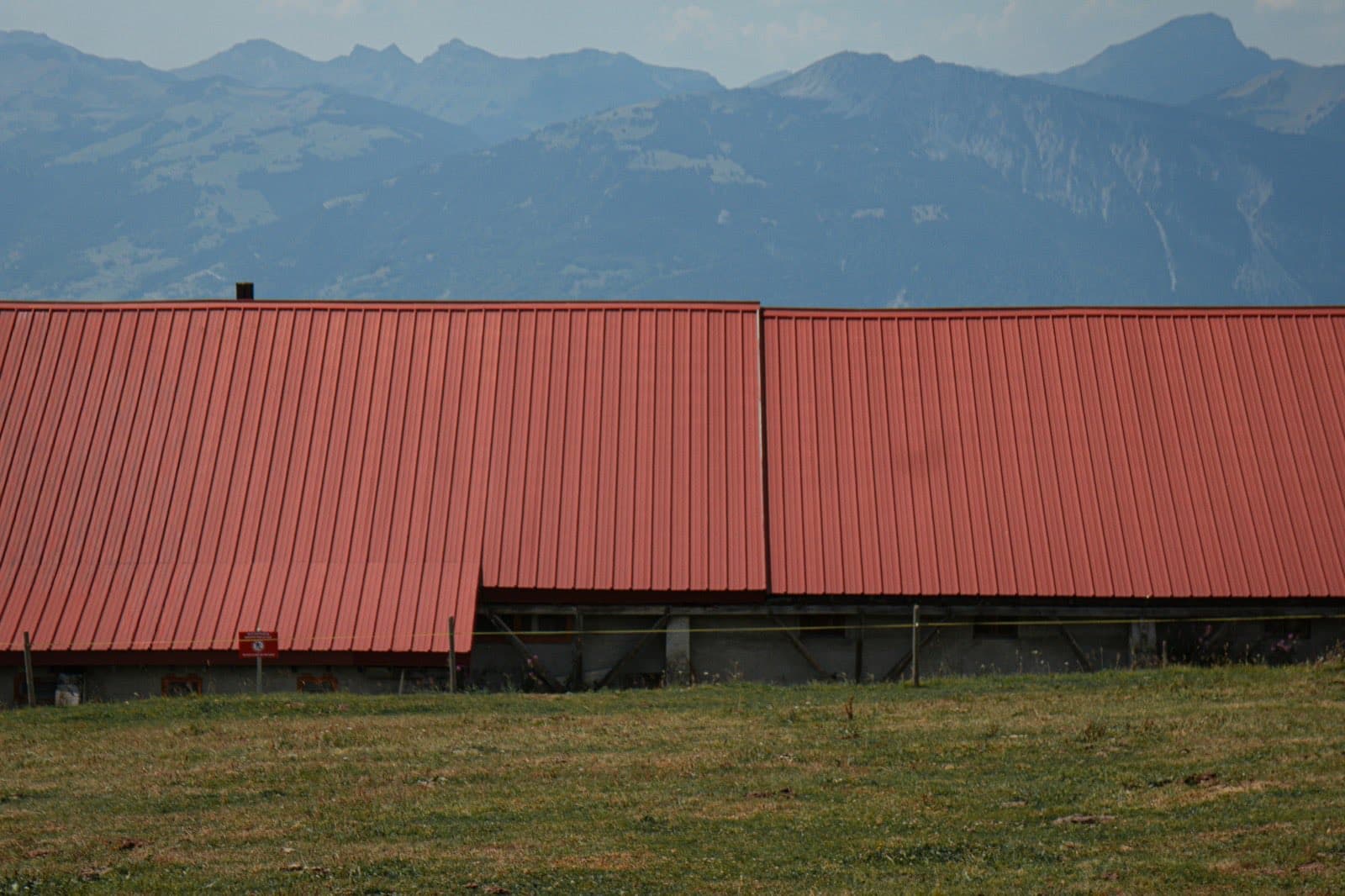
Wind uplift on an agricultural roof is concentrated at the verges and eaves, not in the middle of the slope. That means fixing patterns need to be denser at the edges, and the verge detail matters more than the field detail. Skimping on fixings at the perimeter is a common cause of sheets lifting on exposed sites.
Getting a specification together
If you have the span, the purlin centres and a rough idea of what the building is for, our online roofing calculator will get you most of the way to a specification. For anything unusual, or where you are matching an existing profile, speak to us — it is quicker than guessing and cheaper than remaking.