
Curved roofs turn up more often than you might expect: Dutch barns, older agricultural buildings, bandstands, canopies and a fair number of architectural projects. Profiled steel can follow a curve, but how well depends a great deal on which profile you choose.
Why corrugated curves better than box profile
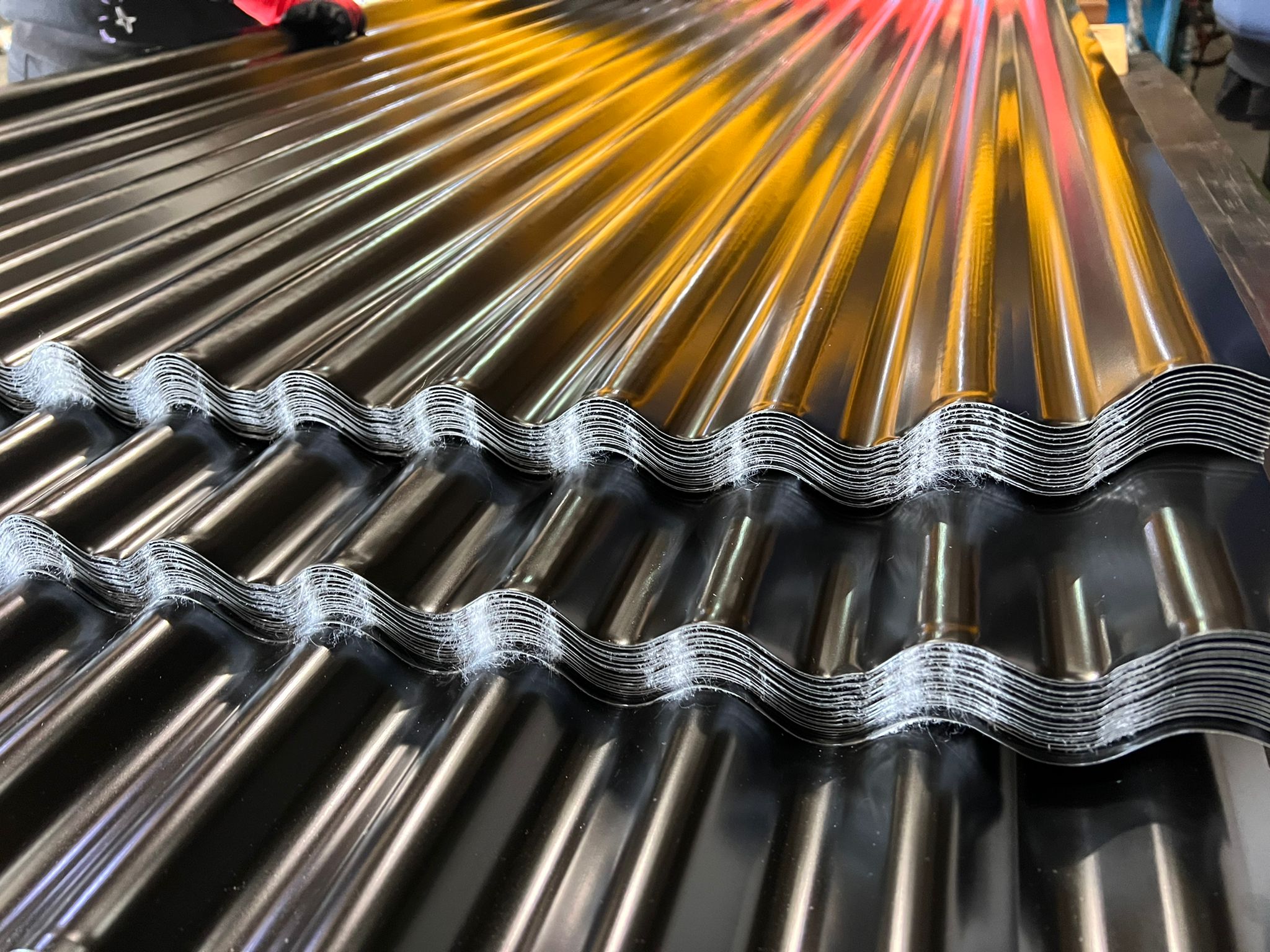
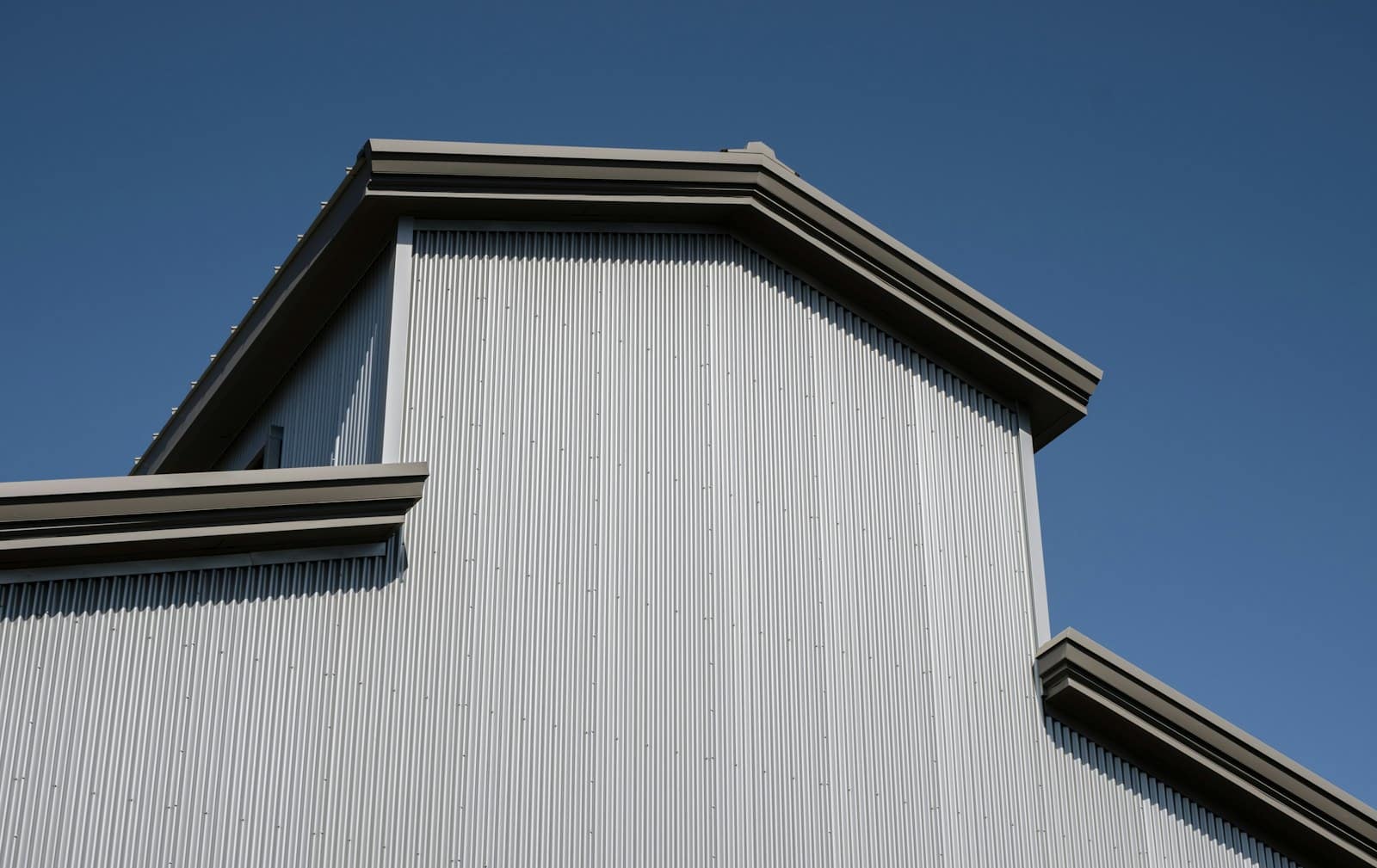
A corrugated sheet has a continuous wave form. The corrugations are shallow and evenly distributed, so the sheet can take up a gentle curve across many small deflections without any one point being overstressed.
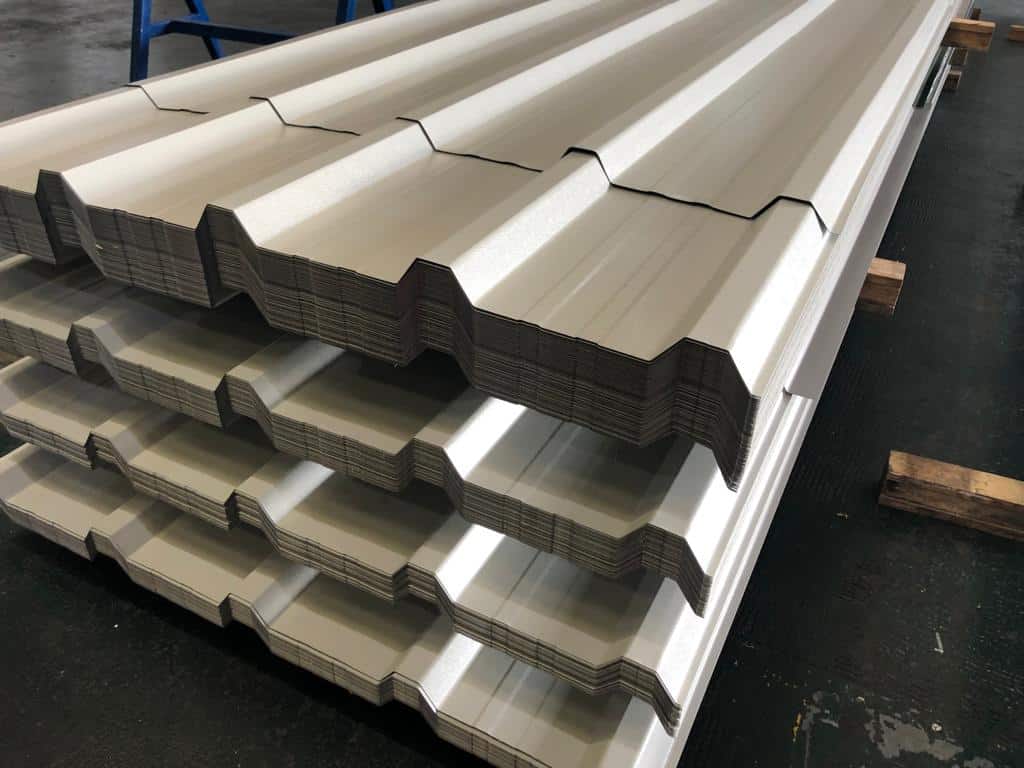
Box profile is the opposite. Its strength comes from deep, widely spaced ribs with flat pans between them, and that geometry resists bending along the length of the sheet. Forcing it to curve tends to distort the ribs and spoil both the appearance and the weathering.
Our corrugated sheets are made in the 13.5/3 profile with a cover width of 990.6mm and lengths up to 10m, which suits long sweeping runs where you want to avoid an end lap partway round a curve.
Crimped versus site-curved
There is an important distinction between sheets that have been curved under controlled conditions before delivery, and sheets sprung into a gentle radius on site during fixing. The first allows tighter radii and a consistent result. The second is limited to shallow curves and depends heavily on the structure behind holding the shape.
If your project needs a genuine tight radius, that is a specialist forming operation and should be established at design stage rather than discovered on site.
What to check before committing
- The radius. Measure it properly. Gentle is achievable, tight is a different job.
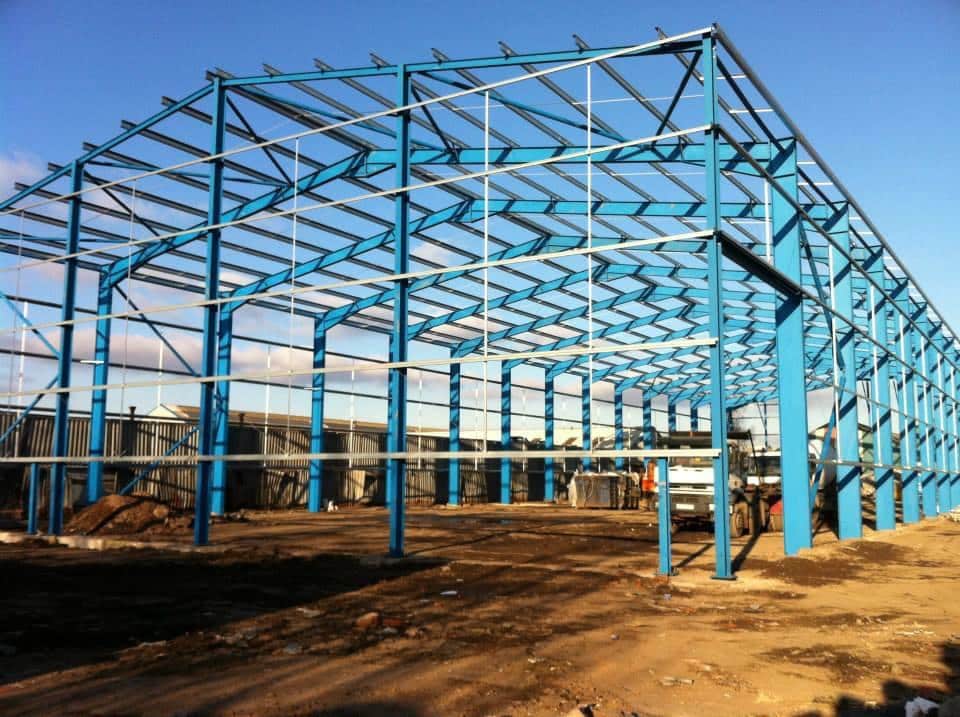
- Support spacing. A curve needs purlins following the same arc, at spacings that hold the sheet to its intended line.
- Drainage. The pitch changes continuously around a curve, and near the crown it may be very shallow indeed. That part of the roof behaves like a low-pitch roof and needs to be detailed as one.
- Laps. End laps on a curve are harder to seal than on a flat plane. Longer sheets that avoid a lap altogether are worth the extra handling.
Matching an existing building
For repairs to older agricultural buildings, matching the existing profile matters as much as the curve. We also manufacture bespoke and obsolete profiles where the original is no longer a standard product.
Tell us about the curve and we will advise on what is realistic.