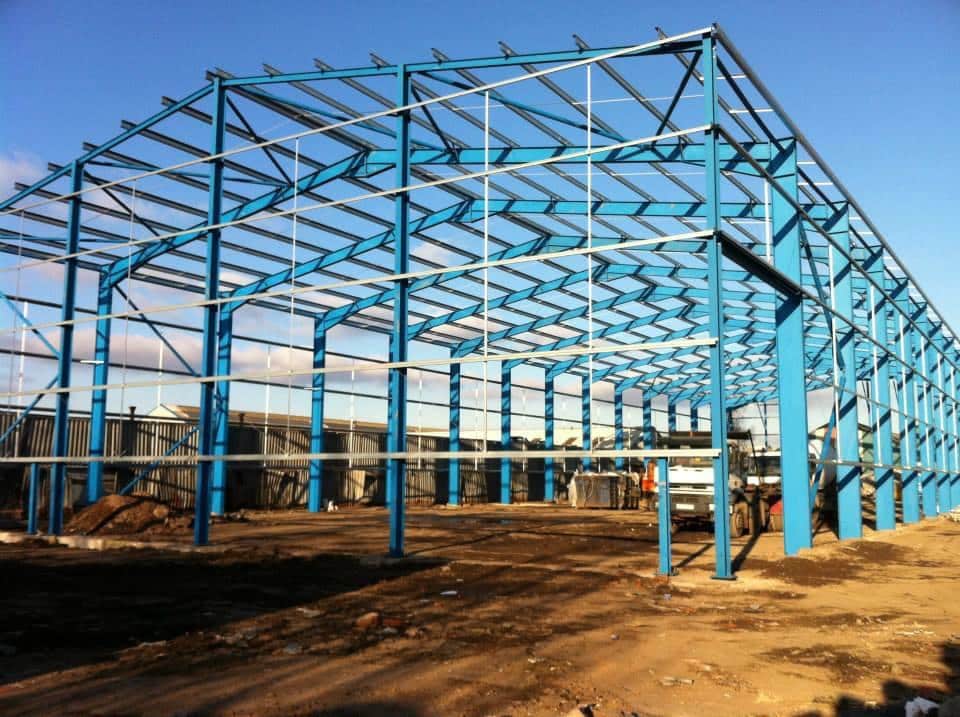

A single skin steel roof over a large open building gets hot. On a clear summer day the underside of the sheet can be considerably warmer than the outside air, and in a livestock building that heat has consequences for welfare as well as comfort.
Why it happens
Steel has very little thermal mass and conducts readily. Solar gain passes through almost immediately, so the inside of the building follows the sun rather than lagging behind it as a masonry structure would. Large roof areas and low eaves make it worse, because there is a lot of collecting surface and not much height for hot air to rise into.
Ventilation first
Before spending on the roof covering itself, look at air movement. Hot air needs a route out at the ridge and a supply of cooler air at the eaves. Many older buildings have neither, or have had openings blocked up over the years. Getting a stack effect working is usually the cheapest meaningful improvement available.
Insulation
Insulation is generally thought of as keeping heat in, but it works equally in the other direction. An insulated roofing panel slows solar gain reaching the inside, and it keeps the inner surface closer to internal air temperature, which helps with condensation in winter as well. For a building in year-round use it addresses both problems at once.
Where the building already has a sound single skin roof, overcladding adds that layer without stripping the existing covering, and keeps the building weathertight while the work goes on.
Rooflights: useful, but a trade-off
GRP roof lights bring in daylight and reduce the need for artificial lighting, which is a genuine benefit in a large shed. They also admit solar gain. The answer is placement and proportion rather than avoidance: enough for good working light, distributed rather than concentrated, and considered alongside your ventilation strategy. We cut roof lights to match box profile, corrugated and Big 6 profiles in lengths up to 6.1m.
Finish and colour
Lighter colours reflect more solar radiation than dark ones. It is a secondary effect compared with insulation and ventilation, but it costs nothing to take into account at the point you are choosing from the range. We supply sheets in a choice of 16 colours across our finishes.
Putting it together
For most agricultural buildings the order of value is ventilation, then insulation, then the details of rooflight placement and colour. Ventilation is cheapest and often most effective; insulation is the durable fix; the rest is refinement.
Tell us about the building and we will help you work out which of these is worth doing.