
Guttering is usually the last thing specified on a steel roof and the first thing to cause trouble. An undersized or badly positioned system will overflow in heavy rain regardless of how well the roof itself is detailed.
Start with the area draining to it
The governing number is the plan area of roof discharging into each run of gutter, not the length of the building. A long shallow roof and a short steep one of the same footprint deliver broadly similar volumes, but the steep roof delivers it faster.
Pitch matters because it affects the speed water arrives at the eaves. A steep roof concentrates flow, which is why a gutter that copes on one building overflows on another of the same size.
Outlets do more work than gutter size
Adding outlets is usually more effective than increasing gutter size. A gutter fills from the far end towards the outlet, so a long run with a single outlet has to carry the whole volume at its downstream end. Two outlets halve that. On long industrial runs, outlet spacing is the main design decision.
Falls
Gutters need a consistent fall towards the outlets. Level gutters hold standing water, which collects debris and accelerates corrosion, and in cold weather it freezes. A small, continuous fall is worth the trouble of setting out properly.
Getting the junction right
Where the roof meets the gutter is a detail that repays attention. Sheets should discharge cleanly into the gutter rather than behind it, and the eaves detail should not allow wind-driven rain to track back under the sheet. This is trim and flashing work, and our flashings and trims are made to suit the profiles we supply.
Maintenance is part of the specification
A gutter that cannot be reached will not be cleared. On agricultural and industrial buildings, leaves, moss and windblown debris accumulate quickly, and a blocked gutter overflows against the building. Access should be considered while the building is being designed, not afterwards.
Matching the roof
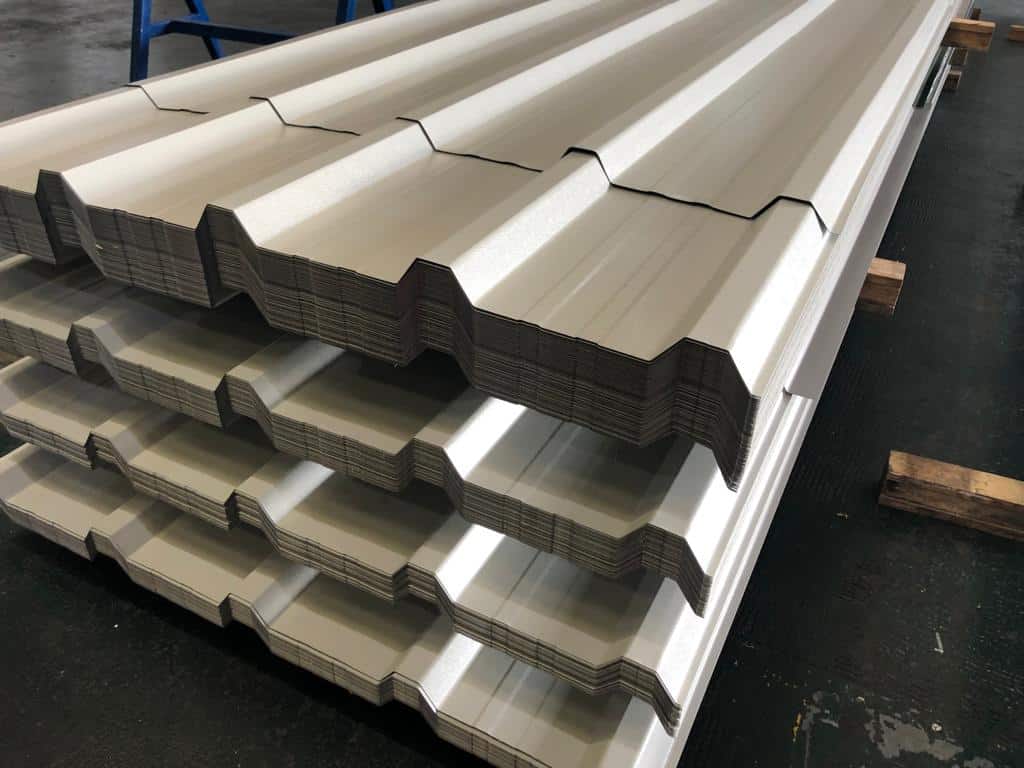
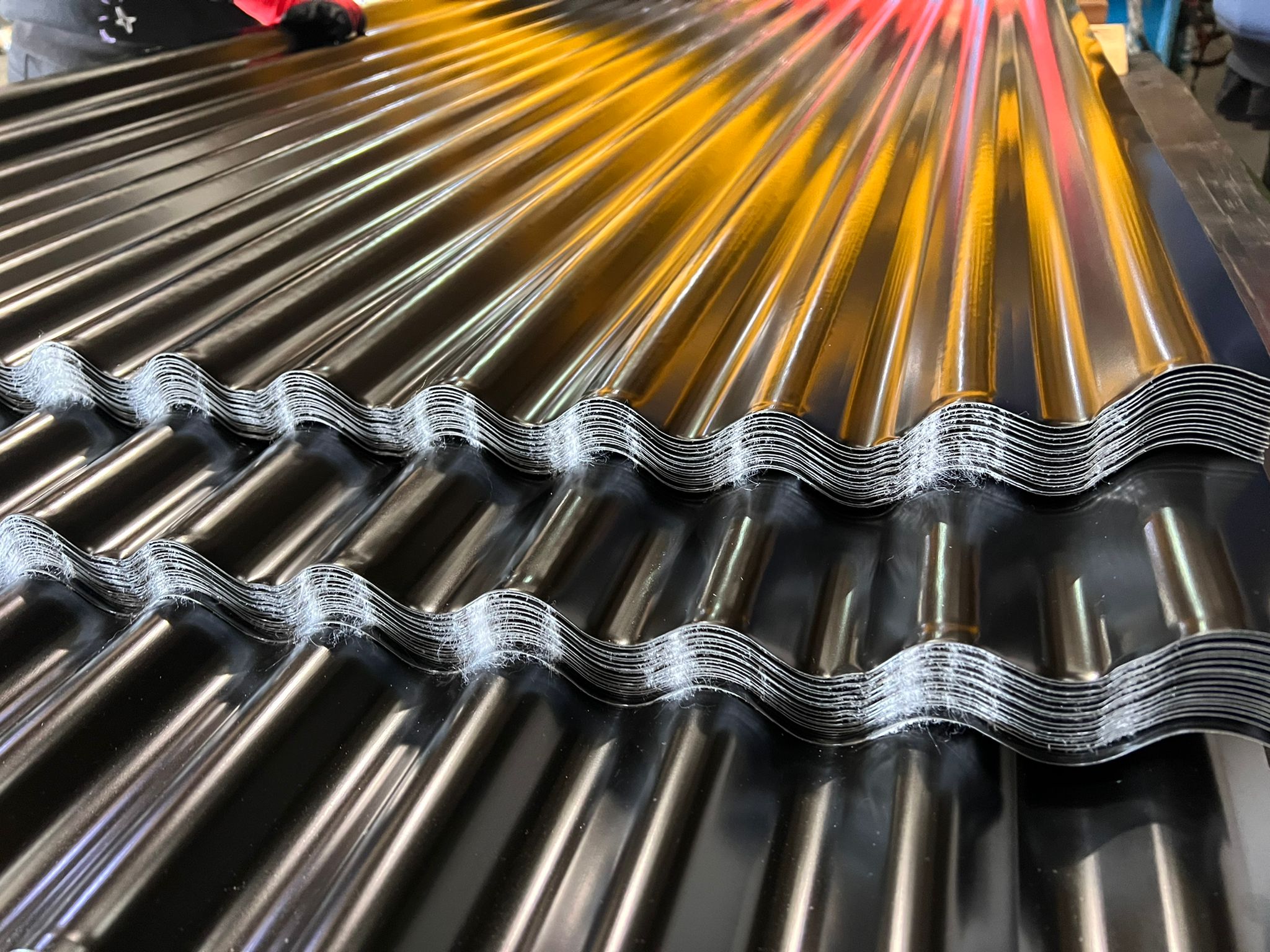
Colour and finish are worth coordinating with the roof. We supply sheets in a choice of 16 colours and a range of finishes, and matching the rainwater goods to the covering makes a noticeable difference to how a building looks when finished.
For help specifying guttering alongside a new roof, get in touch.