
You can, but there’s a right and a wrong way to do it. Box profile sheets are tough once they’re fixed down, but step in the wrong place and you’ll dent the sheet. Go up without the right precautions and you’re putting yourself at risk.
Here’s what you need to know before you get on the roof.
A Quick Look At Box Profile Sheets
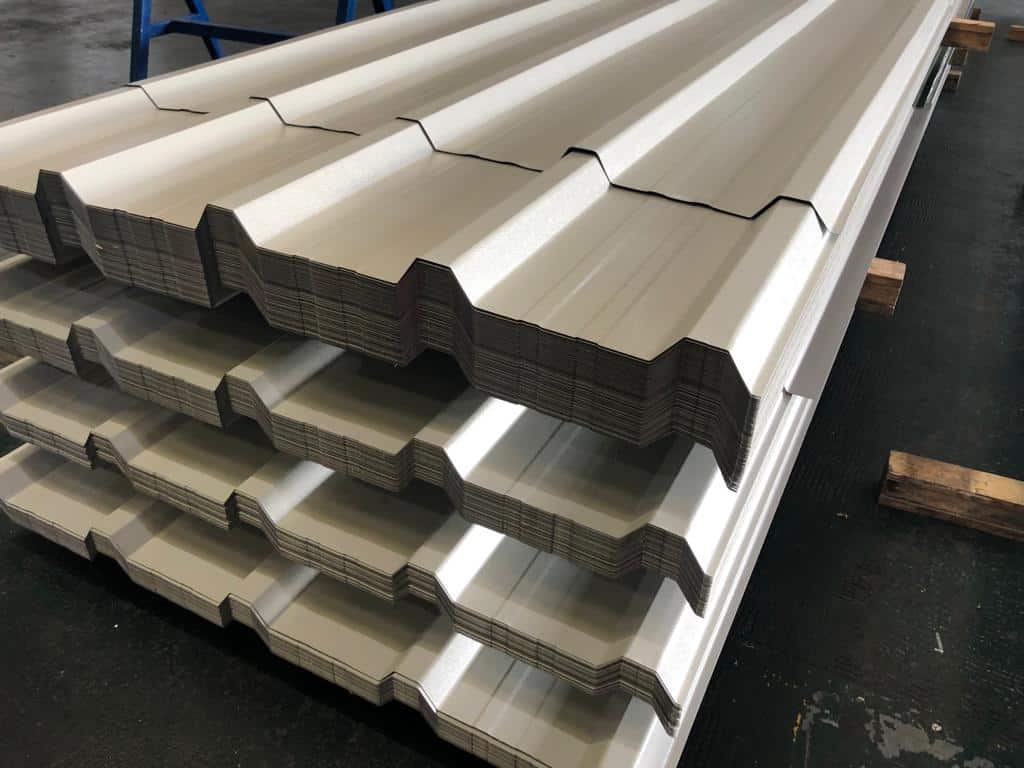
Box profile sheets are metal roofing and cladding sheets with a repeating pattern of raised ribs and flat troughs. That shape is what gives them their strength.
We stock two profiles, the CS32/1000 and the CS34/1000, in thicknesses from 0.4mm to 0.7mm. For roofing we’d usually recommend 0.7mm, while 0.5mm is a popular choice for side cladding.
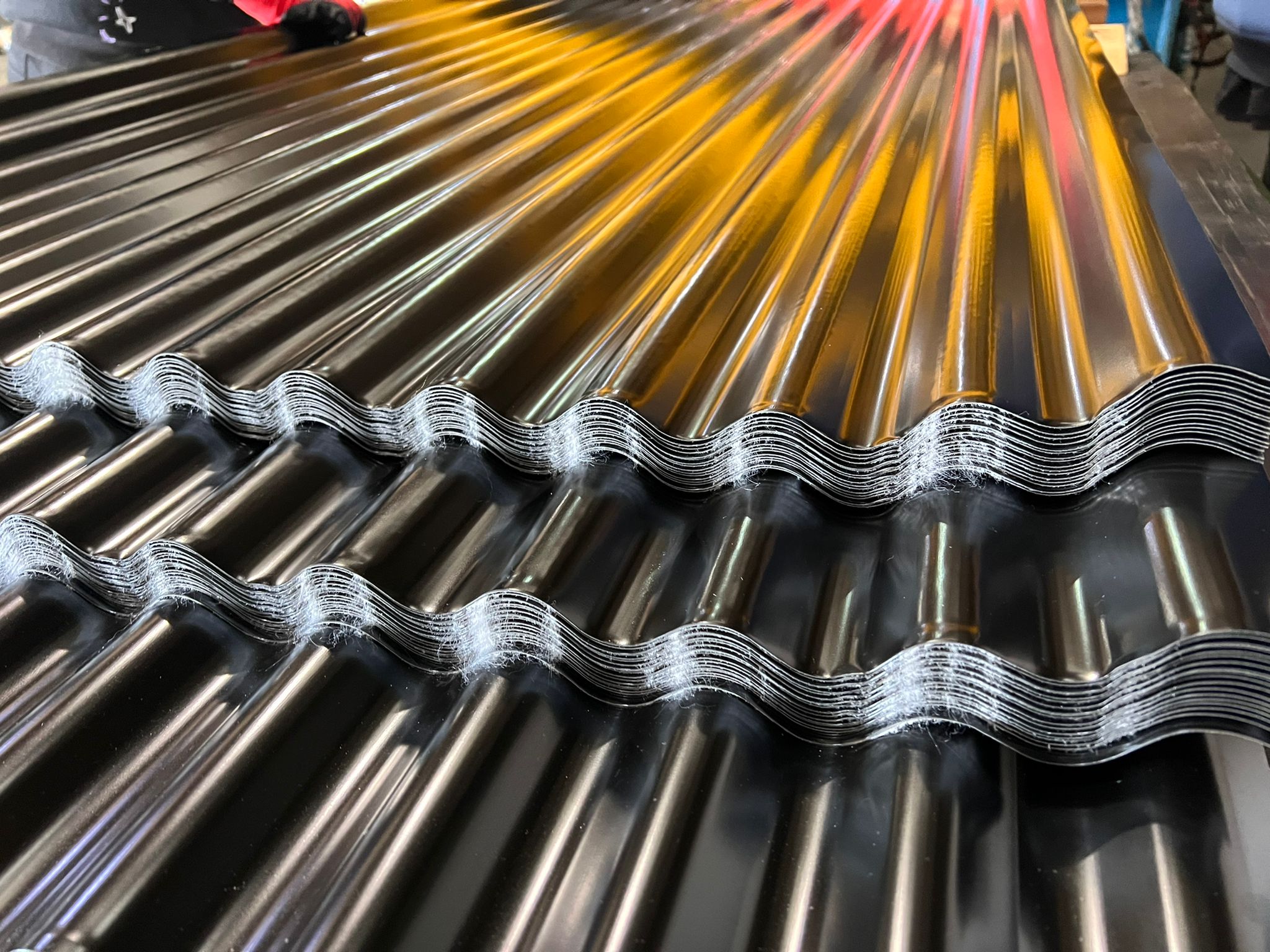
There are three coatings to choose from. Galvanised is a no-frills silver finish. Polyester adds colour and comes with a guarantee of up to 15 years. Plastisol has a thicker, leathergrain texture and a guarantee of up to 25 years (guarantees are subject to terms and conditions). You can see the full range on our box profile roof sheets page.
Before Anyone Goes Up
Most roof accidents happen because the job wasn’t planned properly, so start there. Roof work in the UK falls under the Work at Height Regulations 2005, and the HSE’s Health and safety in roof work (HSG33) is the go-to guide.
In practice, that means:
- the sheets are fitted by trained, experienced installers
- a risk assessment has been done for this roof, on this day
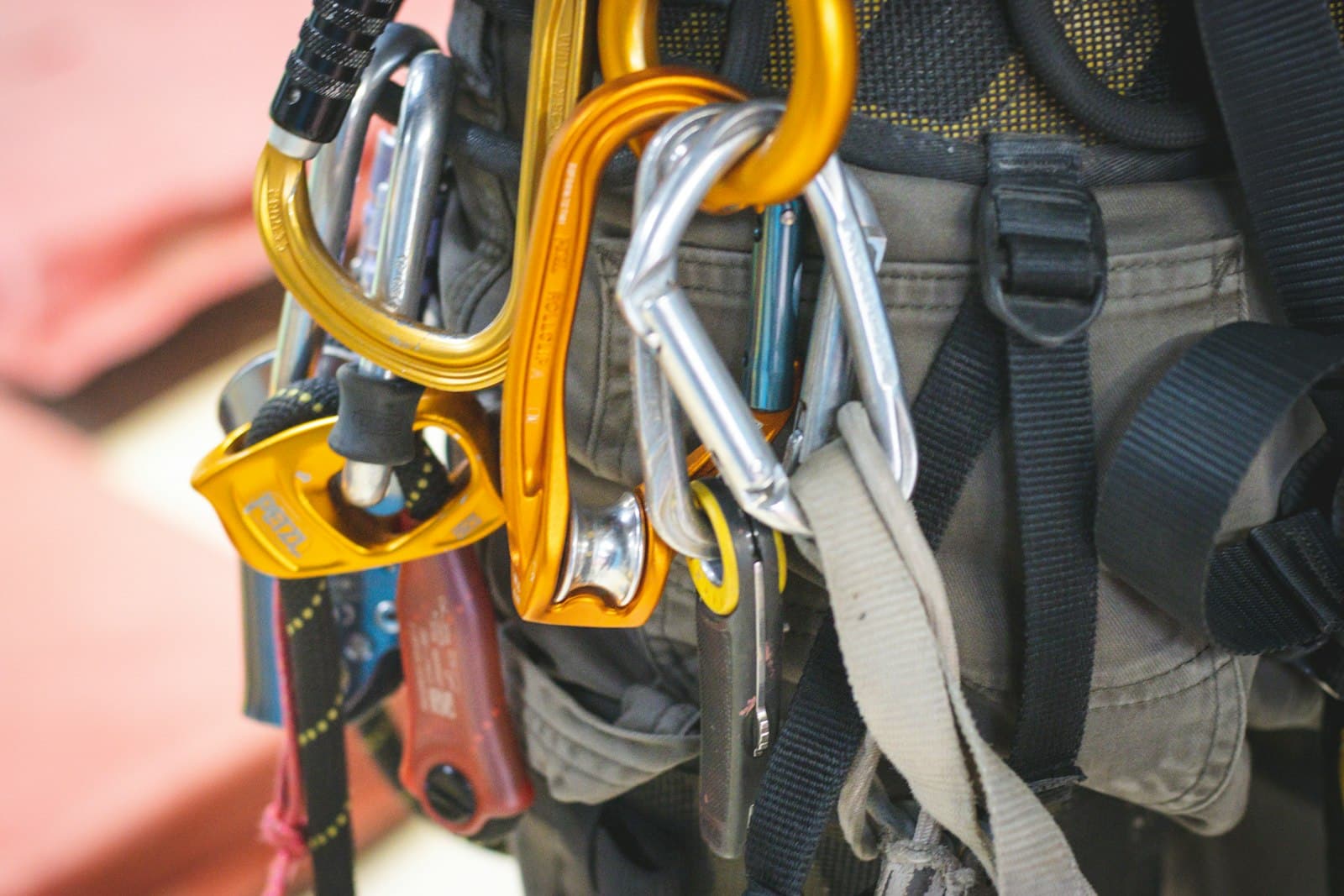
- edge protection, netting or harnesses are in place where needed
- everyone knows where the rooflights are, because they won’t take your weight
- you get onto the roof from a secured ladder or scaffold, not by clambering over the sheets
Where To Step
Walk in the flat troughs, as close to the purlins underneath as you can. That’s where the sheet has the most support. The raised ribs can buckle under your weight, and the middle of a sheet between supports has the least strength of all.
Never walk on a sheet that isn’t fully fixed. A loose sheet can slide or give way without warning. It’s also worth checking the manufacturer’s guidance for the thickness you’re using, because a 0.4mm sheet won’t take as much load as a 0.7mm one.
Using Crawling Boards
Crawling boards (you’ll also hear them called roof boards or load boards) spread your weight over a wider area, which protects the sheets and gives you steadier footing.
Lay them across the ribs rather than along them so each board sits on several ribs at once. Where possible, line them up over the purlins. On a steeper roof, use roof ladders or boards that hook over the ridge so they can’t slide.
One thing to be clear on: crawling boards won’t stop you falling. They’re there to spread your weight, not to replace edge protection.
Footwear
You want safety boots with a good grip, toe protection and ankle support. Avoid very stiff soles or heavy heels, though. They concentrate your weight on a small area and are more likely to leave dents.
Keep the soles clean, as mud and grit cut down on grip and can scratch the coating. Once the tread wears down, it’s time for a new pair.
Rain, Frost and Wind
Metal sheets get slippery fast when they’re wet, frosty or covered in morning dew, so wait until they’ve dried off. Wind is easy to underestimate. A single sheet can catch a gust like a sail and throw you off balance. If the forecast looks poor, it’s better to put the job off a day.
In Conclusion
Yes, you can walk on box profile sheets during installation. Step in the troughs over the supports, use crawling boards, wear the right boots and only go up in dry, calm weather with proper fall protection in place.
When you’re ready to order, our free roofing calculator will help you build a quote.
This article is general guidance and isn’t a substitute for a site-specific risk assessment or advice from a qualified roofer. For more on working safely at height, see the HSE’s roof work guidance.