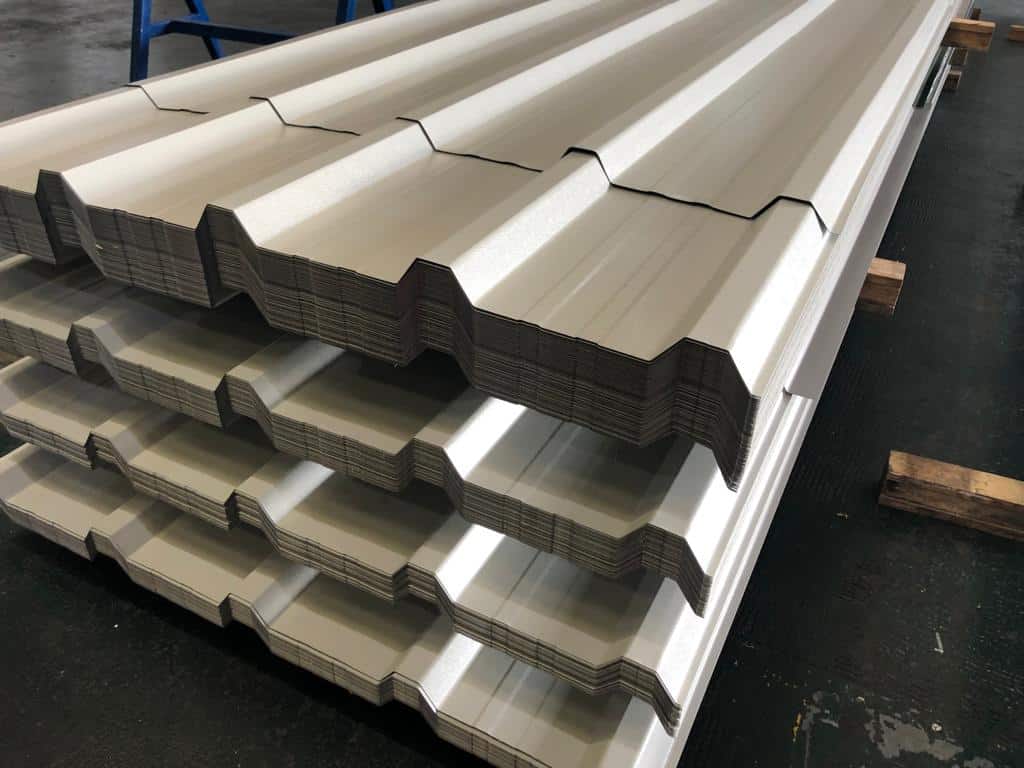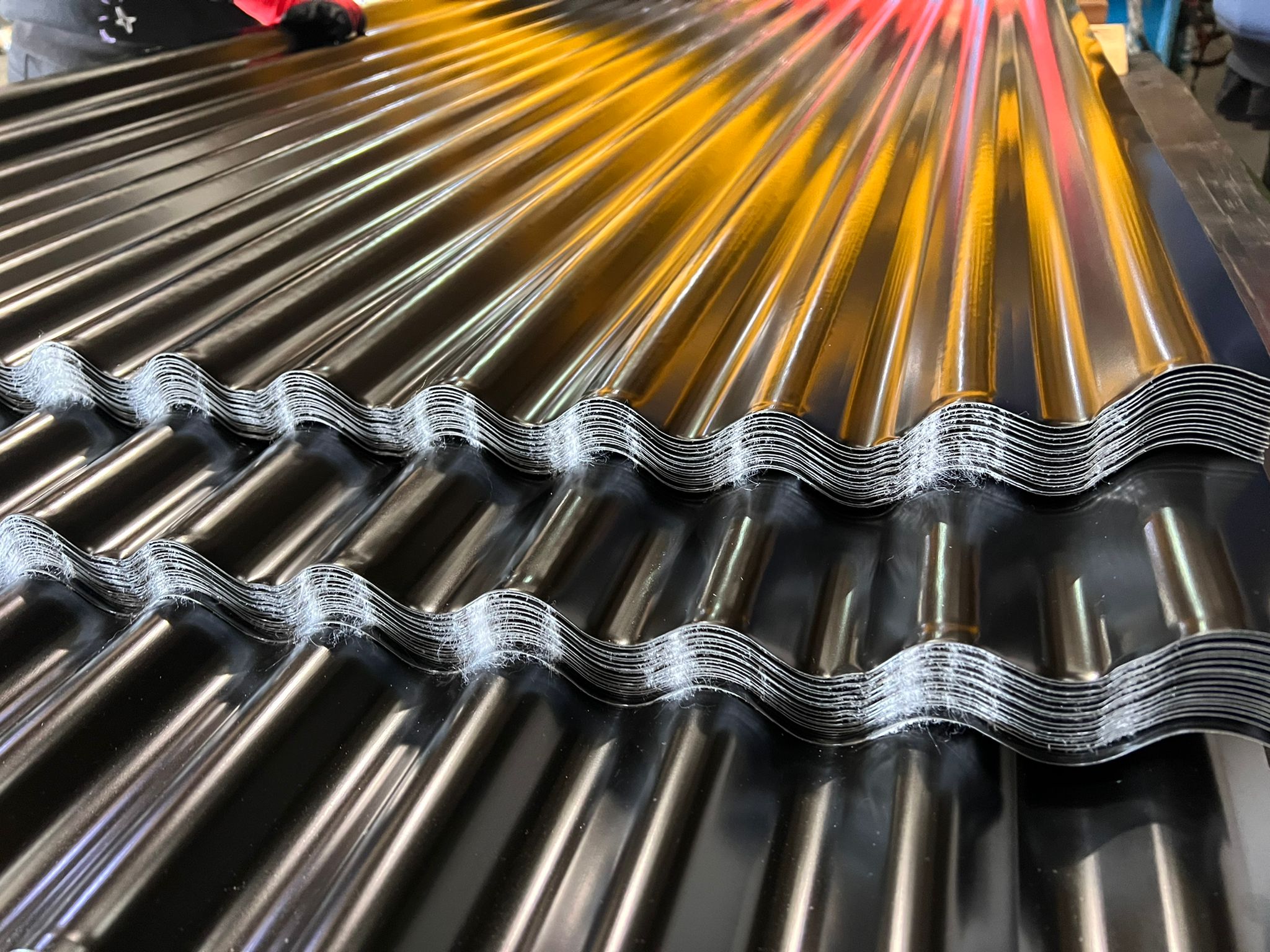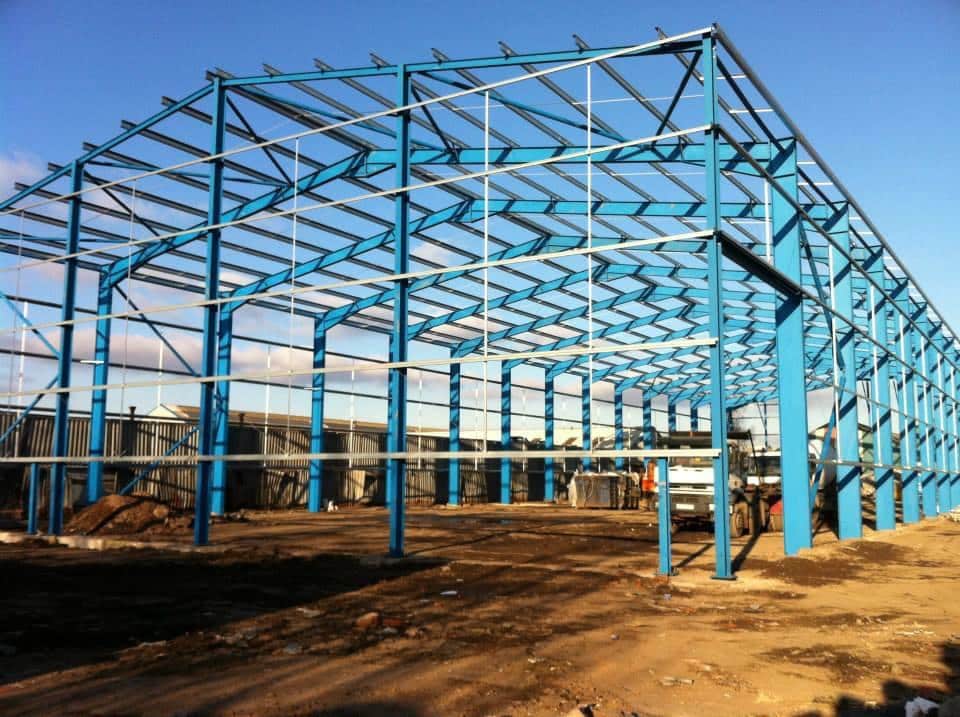

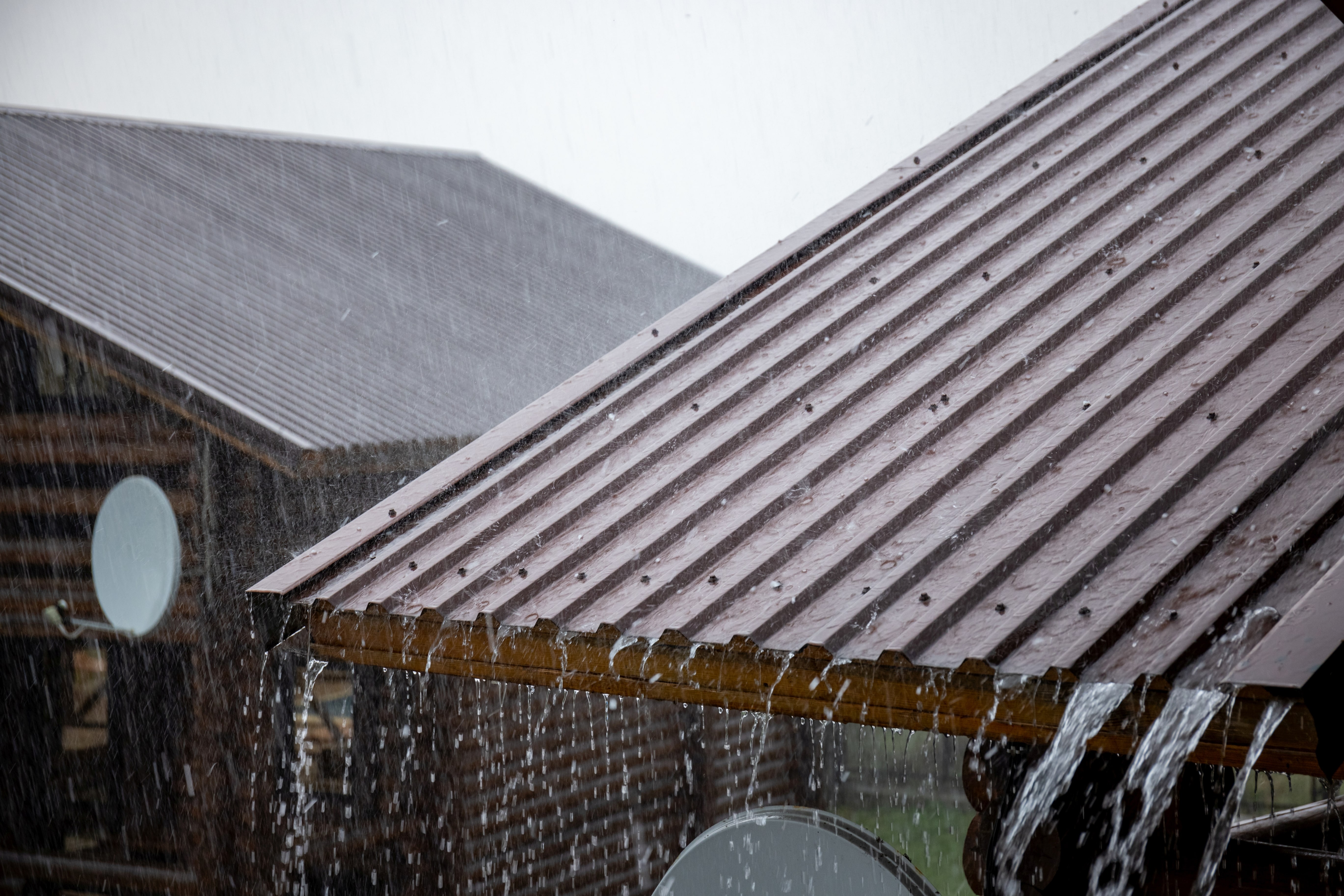
A well-designed and correctly installed metal roof doesn’t have to be noisy in the rain. This concern usually comes from older steel roofs used on barns, warehouses and agricultural buildings, where sheets were fixed over structures with little or no insulation.
Modern metal roofing systems are very different. When installed with proper insulation, secure fixings and a properly designed roof build-up, rain noise is significantly reduced and much closer to that of other roofing types.
In this article, we look at why metal roofs have this reputation, what actually causes noise in poorly installed systems and how it can be prevented.
Why Do Metal Roofs Have A Reputation For Noise?
The question “is a metal roof noisy when it rains?” usually comes from how metal roofing has been used in sheds, barns, stables and other agricultural buildings in the past.
In some of these buildings, the roof sheets are thinner and installed over open structures with little or no insulation. Because of this, rain can sound louder, as there is nothing to absorb or reduce the noise.
However, the metal itself isn’t the whole story. Metal roofing carries vibration, so when rain hits an uninsulated surface, the sound can echo or feel more noticeable. With modern metal roofing systems, the build-up is very different.
When insulation, secure fixings and proper roofing layers are used, rain noise is greatly reduced and a well-insulated metal roof can perform much closer to other common roofing materials.
What Causes Rain Noise On Metal Roofs?
As mentioned, the metal is only one part of the story. The main causes of rain noise are the design of the roof system and its fixings.
1. Vibration From Rain Impact
When rain hits any surface, it creates small vibrations. This is normal and happens across all roofing types.
With metal roofing, these vibrations can become more noticeable if they are not properly controlled within the roof system.
2. A Lack Of Insulation
Insulation is an incredibly important part of any roof system, not just for regulating temperatures but also for reducing sound.
Without insulated roofing sheets:
- Vibrations are not absorbed
- Sound is more easily transferred into the building
- Rainfall can feel louder internally
With proper insulation layers, including composite or twin skin options, rain noise is significantly reduced.
3. Loose Or Incorrect Roof Fixings
The way roofing sheets are fixed has a direct impact on noise levels. Any slight movement in the sheets can increase vibration during wind or rain. This can be caused by:
- Loose fixings
- Incorrect spacing
- Lack of rubber or sealing washers
Sheets also expand and contract as temperatures change, which can cause ticking or creaking noises if they aren’t fixed correctly. Fixing in line with the manufacturers guidance helps prevent this.
4. Hollow Or Open Roof Spaces
Open or unfilled roof spaces can also amplify the sound of rain on the metal.
In structures where there is empty space between the roof sheets, sound waves can:
- Travel more freely
- Bounce around within the structure
- Feel louder inside the building
A fully built-up roof system helps to reduce this effect by absorbing and dampening sound before it reaches the interior.
How Can You Reduce Noise From A Metal Roof?
If you’re looking to reduce rain noise on your metal roof, the good news is that it can be significantly reduced with the right design and installation methods.
It often comes down to how the roof is built, rather than changing the roofing material itself.
Adding Insulation Layers
Insulation is one of the most effective ways to reduce noise in a metal roof.
Insulated roof sheets combine the metal outer layer with an internal insulating core, which helps to:
- Absorb and dampen rain impact noise
- Reduce vibration through the roof structure
- Limit sound transmission into the building
Because the insulation is built into the roofing system itself, it provides consistent performance across the entire roof surface rather than relying on separate layers being added underneath. The result is a quieter, more comfortable internal environment, especially in buildings such as garages and workshops.
Choose Sheets with an Anti-Condensaton Membrane
An anti-condensation roofing membrane is mainly designed to control moisture, but it can also help reduce noise slightly.
It works by absorbing and temporarily holding moisture that forms on the underside of the roof sheet, then releasing it gradually when conditions allow. Because it’s fitted to the underside of the roof sheets, the fleece layer can also help to slightly dampen vibration and soften the “drumming” effect of rain.
It won’t make a single-roof skin as quiet as an insulated one, but it is a useful addition where full insulation isn’t needed.
Use The Correct Fixings And Installation Method
The way metal roofing sheets are fixed plays a key role in reducing noise. Even high-quality sheets can become noisy in the rain if they are not installed correctly.
Secure fixings help keep the roof stable, reducing movement and vibration during wind and rainfall.
When installing metal roofing sheets, it is important to:
- Use correctly spaced fixings to hold sheets firmly in place in line with the manufacturers guidance
- Ensure fixings are tightened correctly (not loose or overtightened)
- Use fixings with rubber or sealing washers to help reduce vibration, keep the roof watertight and the sheets secure
- Avoid allowing any movement between the sheet and the supporting structure
Correct fixing keeps the roof stable, which helps minimise vibration noise from heavy rain or wind.
Options for an Exisiting Roof
If you already have a noisy metal roof, replacing the sheets isn’t always necessary. Adding insulated beneath the roof, or fitting a lined ceiling inside the building, can make a noticeable difference. The right option depends on the building and how it is used, so it’s worth getting advice before starting work.
Ensure A Complete Roofing System
The overall design of your roofing system has the biggest impact on how much noise is heard inside the building. Steel roofing sheets are only one part of the system. The layers and structure beneath them determine overall performance.
A complete system typically includes:
- Insulation layers to absorb vibration and sound
- A secure supporting structure to keep sheets stable
- Correctly installed roofing sheets fixed tightly in place
- Optional membranes or linings for added protection
When all of these elements work together, the result is a strong, weather-resistant roof that significantly reduces the impact of rainfall noise.
So, Are Metal Roofs Noisy In The Rain?
Overall, metal roofs don’t have to be noisy in the rain. Some sound is normal with any lightweight roof, but noticeable noise is usually the result of how the roofing system is designed and installed, rather than the material itself.
With the right approach, including insulation, anti-condensation membranes, secure fixings and a well-constructed roofing system, metal roofs can provide a comfortable, durable and reliable solution for a wide range of buildings. Modern metal roofing is designed with performance and comfort in mind, making it suitable for everything from homes and garages to stables, barns and commercial buildings.
Get The Right Metal Roofing Solution
If you’re considering metal roofing, choosing the right materials and system is key to achieving the best performance.
Cardinal Steels offers a wide range of high-quality roofing sheets, fixings and accessories to help you create a durable, quieter roof. To learn more or to find the right option for your project, get in touch with the team or explore the full product range.